7 Top VoIP Fraud Prevention Tools to Consider
Compare top VoIP fraud prevention tools for enterprise voice, from SBCs and real-time analytics to call controls that reduce toll fraud and risk exposure.
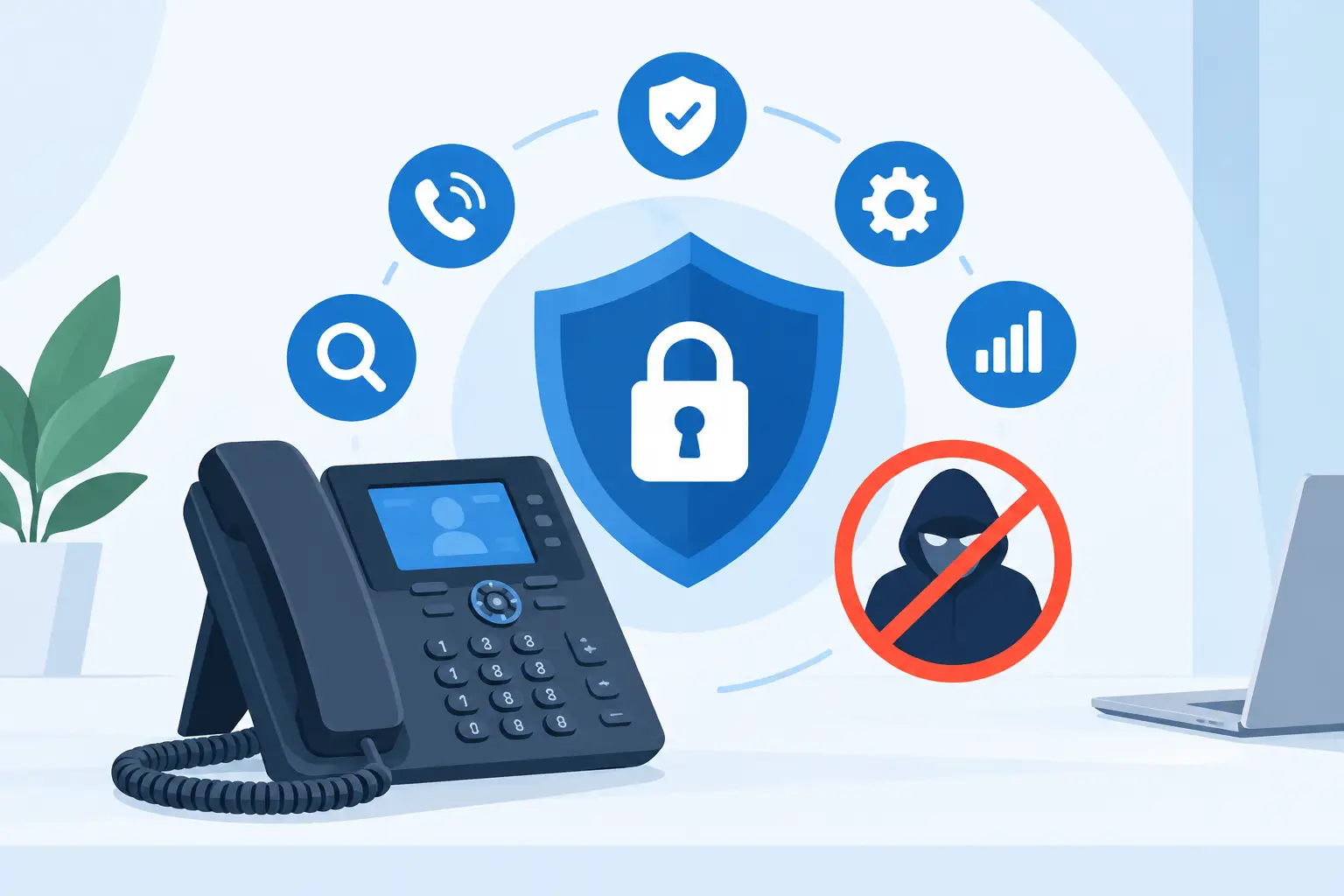
A single compromised extension can generate thousands of dollars in international call charges before the next business day begins. That is why evaluating the top VoIP fraud prevention tools is not just a security exercise. It is an operational requirement for any organization running a cloud PBX, contact center, SIP environment, or distributed communications network.
VoIP fraud is rarely stopped by one feature. Toll fraud, account takeover, artificial traffic, premium-rate abuse, and caller ID spoofing exploit different weaknesses. The strongest approach combines edge protection, identity controls, real-time detection, and clear response procedures.
What VoIP Fraud Prevention Must Stop
Most enterprises first think of toll fraud: an attacker gains access to an extension, trunk, or voicemail system and places expensive outbound calls. That remains a major risk, particularly where international dialing, after-hours calling, or SIP trunk access is broadly available.
But the threat surface is wider. Fraudsters can use stolen credentials to change forwarding rules, register unauthorized endpoints, or access administrator portals. They may generate high-volume calls to inflate traffic, probe IVR menus for account data, or spoof trusted numbers to increase answer rates. Contact centers also face social engineering attacks that target agents and supervisors rather than the phone platform itself.
The right technology stack depends on your deployment model. A multi-site enterprise with carrier interconnects needs stronger perimeter and routing controls than a small office using a managed cloud calling plan. Organizations in regulated industries may also require longer audit trails, regional call restrictions, and tighter administrative permissions.
7 Top VoIP Fraud Prevention Tools to Consider
1. Session Border Controllers
A session border controller, or SBC, is the primary security control at the edge of a SIP environment. It sits between your internal voice infrastructure and external carriers, providers, or internet-facing endpoints. Its role includes validating SIP traffic, controlling call routing, hiding internal network details, and blocking malformed or unauthorized connection attempts.
For enterprises operating on-premises, hybrid, single-tenant, or BYOC architectures, an SBC is often non-negotiable. Look for topology hiding, SIP normalization, rate limiting, access control lists, encryption support, and detailed call logs. The trade-off is operational complexity: SBC policies require careful configuration and periodic tuning, especially when adding carriers, remote sites, or new voice applications.
2. Real-Time Fraud Detection Analytics
Fraud analytics engines examine call detail records and live traffic patterns for behavior that does not match normal use. Useful signals include sudden spikes in international calls, repeated short-duration calls, unusual destination countries, rapid registration attempts, and call activity outside approved business hours.
The best systems can trigger alerts and automated actions while calls are in progress. That distinction matters. A report delivered the next morning may identify fraud, but it will not limit the financial damage. Define alert thresholds by department, geography, user role, and historical calling patterns rather than applying one global limit to every extension.
3. Outbound Dialing Controls
Outbound calling policies are among the most effective and least expensive anti-fraud measures. They restrict which destinations users, queues, departments, and applications can reach. At a minimum, businesses should be able to block premium-rate numbers, high-risk international destinations, and regions where they have no legitimate business need.
Granular controls are better than blanket blocks. Finance may need international calling while a reception desk does not. A contact center may need customer callbacks in specific countries but should not have unrestricted dialing to every global destination. Set daily spend caps, maximum call duration, concurrent call limits, and after-hours policies as additional safeguards.
4. Multi-Factor Authentication and Role-Based Access
Many VoIP incidents begin with a stolen password, not a flaw in call routing. Multi-factor authentication protects administrative portals, user accounts, softphone applications, and remote management access. It makes a password alone insufficient for an attacker to take control of an extension or change sensitive settings.
Role-based access control limits what each user can do after authentication. Agents should not be able to modify outbound routes. Supervisors may need reporting access without access to carrier credentials. Platform administrators should have separate named accounts, not shared logins. These controls also improve accountability during incident investigations.
5. SIP Registration and Endpoint Security
Unauthorized SIP registrations can allow attackers to impersonate endpoints or direct traffic through your environment. Endpoint security tools and platform policies help verify that only approved phones, softphones, gateways, and applications can register.
Use strong, unique SIP credentials, disable unused extensions, restrict registrations by IP address where practical, and monitor failed authentication attempts. Encrypt signaling with TLS and media with SRTP when the environment supports it. Encryption does not replace fraud controls, but it reduces exposure to interception and credential theft across untrusted networks.
6. STIR/SHAKEN and Caller ID Verification
STIR/SHAKEN tools help establish whether the calling party is authorized to use a presented telephone number. They are designed primarily to reduce caller ID spoofing, but they also strengthen trust decisions across outbound calling programs and customer-facing contact centers.
For organizations placing high volumes of outbound calls, verified caller identity can protect brand reputation and improve answer rates. For inbound traffic, attestation information can contribute to routing and risk decisions, although it should not be treated as a standalone fraud verdict. A verified number can still be part of a social engineering attempt.
7. Security Information and Event Management Integration
Voice platforms produce valuable security data: authentication failures, registration events, routing changes, call spikes, administrative changes, and trunk activity. Sending that information into a SIEM allows security teams to correlate voice events with identity, endpoint, network, and cloud activity.
This matters when fraud is part of a broader compromise. For example, a suspicious login to a user account followed by a forwarding-rule change and international calls should create one connected investigation, not three disconnected alerts. SIEM integration is especially valuable for enterprises with a security operations center, compliance obligations, or multiple communications platforms.
How to Select the Right VoIP Fraud Prevention Stack
The best solution is usually a layered stack, not a single fraud product. Start with the controls closest to the potential loss: outbound calling restrictions, destination blocks, spend limits, and real-time alerting. Then add protective layers around identities, endpoints, SIP traffic, and administration.
A practical evaluation should answer four questions:
- Can the platform detect suspicious activity while it is happening and automatically stop or limit calls?
- Can policies be applied by user, site, department, queue, carrier, destination, and time of day?
- Does the system provide audit logs that show who changed routes, permissions, forwarding settings, and credentials?
- Can voice security events integrate with the organization’s existing security monitoring and incident response processes?
Deployment flexibility also deserves attention. Cloud-native platforms may handle core security controls for you, but customers still need to manage permissions, dialing policies, and user behavior. Self-hosted and hybrid deployments provide more control over data paths and network architecture, while placing more responsibility on internal teams to patch, configure, and monitor the environment.
For organizations that need Cloud PBX, contact center, and omnichannel capabilities under one operational model, a platform such as RingQ can help centralize policy management across communications workflows. The key is to confirm that fraud controls remain consistent as users move between desk phones, softphones, mobile access, contact center queues, and integrated business applications.
Operational Practices That Make the Tools Work
Technology cannot compensate for unmanaged access. Review international dialing permissions regularly, especially after organizational changes. Disable accounts immediately when employees leave, and audit dormant extensions, test numbers, and legacy SIP credentials that may no longer have an owner.
Establish a fraud response playbook before an alert occurs. It should define who can disable an extension, block a destination, suspend a trunk, contact the carrier, and authorize a service restoration. Every minute spent deciding ownership during an active fraud event can increase loss.
Also test controls under realistic conditions. Confirm that legitimate international calls can still be completed by authorized teams, that emergency calling remains unaffected, and that alerts reach the correct people outside business hours. Security policies that disrupt critical customer communications will eventually be bypassed.
The most effective VoIP fraud program makes abnormal calling difficult, visible, and short-lived. Build controls around how your organization actually communicates, review them as traffic patterns change, and give your teams the authority to act before a suspicious call pattern becomes a material incident.
See RingQ in action
Talk to our team and find the right cloud PBX and contact center setup for your business.
Book a demo