
Connect Every Phone.Expose Nothing.
RingQ Secure Tunnel links every desk phone at a remote site to your Cloud PBX through a single outbound connection — with zero public SIP exposure and nothing for attackers to find. There's no SIP trunk to scan, no port to forward, and no attack surface to find.
- 1
- Outbound port required
- 0
- Public SIP endpoints
- 3
- Deployment options
- 100%
- Encrypted in transit
Zero Public SIP Exposure
No SIP endpoint is ever published to the internet, so there's nothing for scanners or toll-fraud bots to attack.
Single Port Simplicity
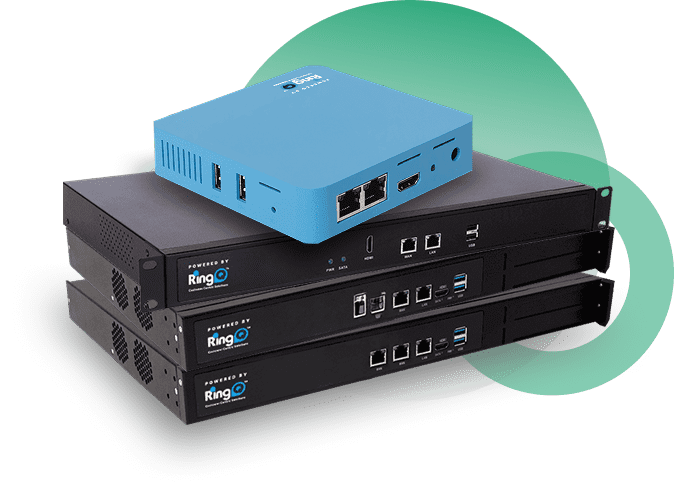
One outbound connection on port 6010 is all it takes — no complex firewall rules, no multi-port SIP/RTP ranges.
Deploy Almost Anywhere
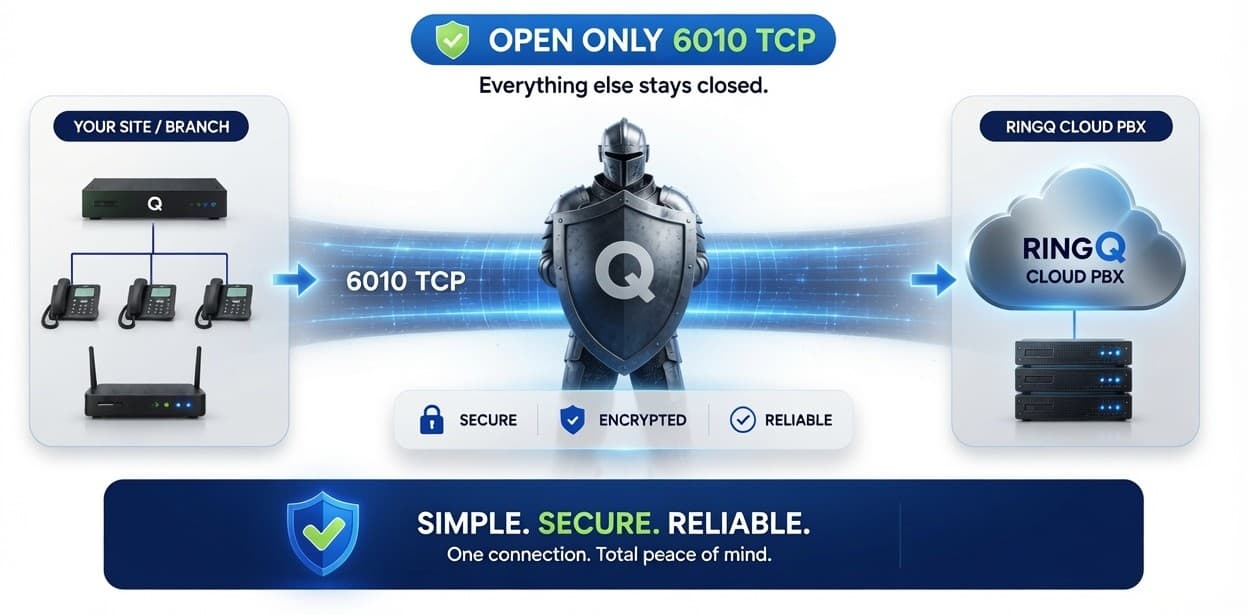
Runs on a Linux ISO, a lightweight distro, a Raspberry Pi, or a standard Windows machine — whatever the site already has.
Works With Existing Phones
Your physical desk phones plug straight into the tunnel device — no swapping hardware, no re-provisioning headaches.
Mobile-Ready Security
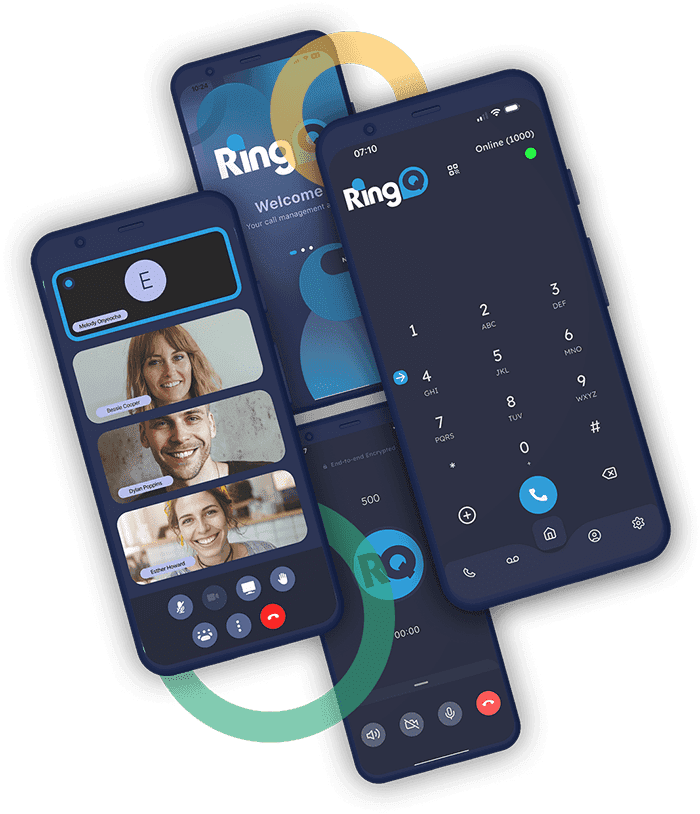
The same secure-tunnel principle extends to RingQ's iOS and Android apps, keeping remote and mobile users off the public SIP grid too.
No Cloud-Side Port Forwarding
The cloud PBX opens one point of entry — period. No per-site port forwarding, no NAT gymnastics, no growing firewall exception list.
A Locked Tunnel Between Your Phones and Your PBX
Every desk phone at a client location plugs into the RingQ Secure Tunnel appliance. The appliance opens a single encrypted connection out to your Cloud or Remote PBX on port 6010 — nothing is ever listening for inbound traffic on the public internet. You can't hack a door that isn't there.
Built for Remote & Multi-Site Locations
Whether it's a branch office, a retail counter, or a single agent working from a home office, the Secure Tunnel drops into the environment you've already got. No dedicated server room. No specialist install visit — just plug in the phones and connect.
Only Port 6010 Ever Leaves the Building
Traditional SIP setups mean opening 5060, RTP ranges, and often remote-management ports to the outside world — a standing invitation to scanners and toll-fraud bots. RingQ Secure Tunnel replaces all of that with a single outbound connection on port 6010. Everything else on the site stays closed, exactly as your IT team wants it.

The Same Security Model for iOS & Android
The Secure Tunnel concept isn't limited to desk phones. RingQ's mobile apps connect to the Cloud PBX through the same single-point-of-entry model — so whether your team is at a desk, on a Raspberry Pi in a back office, or on a phone in the field, the cloud side never needs more than one port opened.
You Can't Hack a Door That Isn't There
Public SIP trunks are one of the most commonly attacked pieces of business infrastructure — constantly scanned for weak credentials and used for toll fraud. RingQ Secure Tunnel removes the door entirely.
No Inbound Attack Surface
The tunnel only initiates outbound connections — there's no listening SIP port for attackers to find or brute-force.
Encrypted End-to-End
All voice and signaling traffic travels inside an encrypted tunnel, protecting calls from interception in transit.
Predictable, Auditable Traffic
IT teams see one outbound connection to one destination — easy to whitelist, easy to monitor, easy to explain to auditors.
Get the Secure Tunnel Client
Download the client for Windows or Linux, or follow the setup guides below.
Download Secure Tunnel ClientWhy Choose RingQ Secure Tunnel?
Drop the tunnel device on-site, plug in the phones, and connect — no lengthy firewall change requests with client IT and no waiting on specialist installs.