PBX Licensing Models for Control and Scale
Compare PBX licensing models by cost, deployment control, scalability, and support so your business can select the right communications investment today.
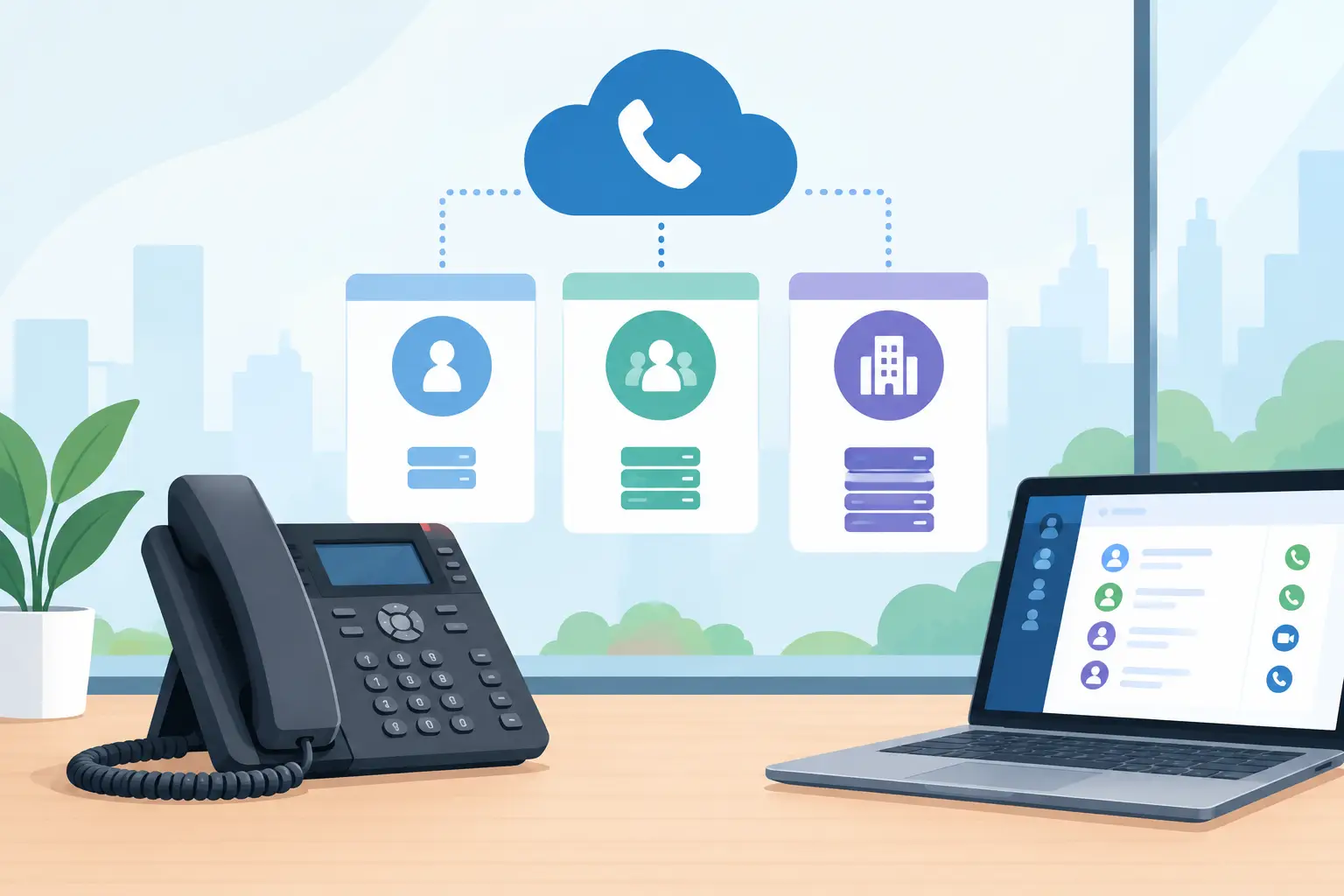
A PBX purchase can look cost-effective in a proposal and become expensive in production. The difference usually comes down to PBX licensing models: how users, call paths, contact center functions, integrations, and infrastructure are priced as the business changes. A licensing decision is not just a procurement detail. It determines how easily your organization can add locations, support remote teams, meet compliance requirements, and maintain predictable operating costs.
For IT leaders and contact center operators, the right model is the one that reflects actual demand without limiting future growth. That requires looking beyond a per-seat price.
The Main Types of PBX Licensing Models
PBX vendors commonly package licensing around users, concurrent calls, features, or a combination of all three. Each approach can be commercially sound, but the best fit depends on your call volumes, workforce structure, deployment preference, and operational priorities.
Per-user or per-extension licensing
Per-user licensing assigns a recurring or perpetual cost to each named employee, extension, or device. It is often the simplest model to budget because an organization can multiply the user count by the selected plan tier. This structure works well for knowledge workers, distributed teams, and businesses where most employees need direct calling, voicemail, mobility, and collaboration capabilities.
The trade-off is that not every employee uses telephony at the same level. A warehouse worker, seasonal employee, or occasional desk-phone user may not justify the same license tier as a sales representative or executive assistant. Before committing, confirm whether basic extensions, common-area phones, and inactive accounts consume full licenses.
Concurrent call licensing
Concurrent licensing is based on the number of simultaneous calls the system can support, rather than the number of named users. A company with 300 employees may only need capacity for 60 active calls at peak periods. This can lower costs substantially where call activity is intermittent.
However, concurrent-call estimates must be based on measured traffic, not assumptions. Busy-hour demand, inbound campaigns, outbound dialing, emergency calling requirements, and calls that remain connected during transfers all affect capacity. Under-licensing can lead to blocked calls at the moment customers or employees need the system most.
Feature-based licensing
Feature-based licensing separates core calling from advanced capabilities such as call recording, analytics, CRM integrations, AI-powered IVR, supervisor tools, quality management, omnichannel routing, and outbound campaigns. It gives businesses a controlled way to deploy higher-value functions to the teams that need them.
This model is useful when a small contact center requires advanced workflows while the rest of the company only needs standard business telephony. The risk is fragmented purchasing. A low base license can appear attractive until the organization adds the functions required for compliance, reporting, customer service, and administration.
Capacity, site, or server licensing
On-premises and self-hosted PBX platforms may use licensing tied to a server, appliance, site, session capacity, or a defined number of extensions. This approach can provide strong cost control for organizations with stable usage and internal technical resources. It also supports environments where data residency, network design, or regulatory rules require direct infrastructure control.
Capacity licensing normally involves upfront software costs, support agreements, and responsibility for upgrades, high availability, backups, and disaster recovery. It can produce a favorable long-term total cost of ownership, but only when the organization accounts for the people and infrastructure required to operate it correctly.
Subscription vs. Perpetual PBX Licensing Models
The commercial term matters as much as the license metric. Most cloud PBX services use subscription licensing, generally billed monthly or annually. The provider operates the platform, applies updates, and scales infrastructure behind the service. This model aligns spending with active users and typically reduces the initial capital outlay.
Subscription licensing is a practical choice for businesses opening new locations, supporting hybrid work, or running customer service teams with changing headcount. It also makes it easier to adopt capabilities such as cloud contact center routing, AI-assisted self-service, and CRM-connected workflows without rebuilding the communications stack.
Perpetual licensing grants the right to use a specified software version indefinitely, usually with a separate annual maintenance and support contract. It is most common in on-premises and self-hosted deployments. Organizations may prefer it when they need to control upgrade timing, operate in isolated networks, or capitalize software investments.
Neither model is automatically less expensive. A subscription shifts costs to operating expense and includes more managed service elements. A perpetual model shifts more investment and operational responsibility to the customer. The correct comparison should cover three to five years, including implementation, carriers, hardware, cloud infrastructure, support, security operations, and planned expansion.
What to Measure Before Choosing a License Structure
A licensing model should be tested against operational reality. Start with user roles, but do not stop there. A business with 200 employees may have 50 power users, 100 standard users, 20 shared-area devices, and 30 seasonal workers. Treating those groups as identical can inflate spend or leave key teams without the tools they need.
Next, examine call behavior. Review peak concurrent calls, average call duration, inbound and outbound patterns, after-hours coverage, and the number of locations that may need local survivability. For contact centers, include expected growth in agents, supervisors, digital channels, recording retention, and reporting requirements.
Also assess administrative control. Some organizations want a provider-managed multi-tenant cloud service that minimizes internal maintenance. Others need a single-tenant or self-hosted environment for isolation, custom integrations, or tighter governance. Licensing should support that operating model rather than force an architecture that creates risk later.
Avoid Hidden Cost Drivers
The most expensive licensing surprises are rarely in the core PBX line item. They appear in add-ons and service boundaries. Ask whether the quoted price includes emergency calling, local and toll-free numbers, SIP trunking, recording storage, transcription, API access, CRM connectors, SMS or social messaging, international calling, and premium support.
Implementation also deserves scrutiny. Complex call flows, IVR menus, number porting, carrier migration, user training, and integration testing require time. A low license price does not offset a rollout that disrupts customer service or leaves administrators unable to manage routine changes.
Contract flexibility is another cost control mechanism. Confirm how upgrades, downgrades, seasonal licenses, mergers, divestitures, and inactive users are handled. Annual commitments may deliver better unit pricing, but they should not turn a workforce reduction or business change into stranded spend.
Match Licensing to the Deployment Model
Cloud, on-premises, self-hosted, single-tenant, and multi-tenant deployments carry different licensing implications. Multi-tenant cloud licensing generally favors speed, standardized operations, and elastic scale. Single-tenant cloud environments can provide more isolated resources and configuration control, often at a higher price point. Self-hosted and on-premises systems offer the greatest infrastructure control, but they demand stronger internal capabilities.
A platform that supports multiple deployment models gives organizations room to make a licensing decision based on business requirements instead of vendor limitations. For example, RingQ can support PBX, contact center, and customer experience capabilities across cloud and controlled deployment environments, helping businesses align licensing with their security and operating model.
Questions to Ask Every PBX Vendor
Before signing, ask the vendor to show how the license changes at 25%, 50%, and 100% growth. Request separate pricing for standard users, contact center agents, supervisors, shared devices, and advanced features. Ask which capabilities are included natively and which require separate subscriptions.
You should also confirm ownership of phone numbers and recordings, service-level commitments, upgrade responsibilities, support response times, and exit terms. If your communications environment includes CRM workflows, messaging, conferencing, or AI automation, validate those requirements in a real use case instead of accepting a feature checklist.
The strongest PBX licensing decision is one your finance team can forecast, your IT team can govern, and your customer-facing teams can use without workarounds. Choose the model that gives each group enough room to grow, then revisit utilization before the next contract cycle rather than after costs have already drifted.
See RingQ in action
Talk to our team and find the right cloud PBX and contact center setup for your business.
Book a demo