What Cloud Telephony Costs Actually Include
Understand cloud telephony costs across licenses, calling, integrations, security, and support to build an accurate, scalable communications budget now.
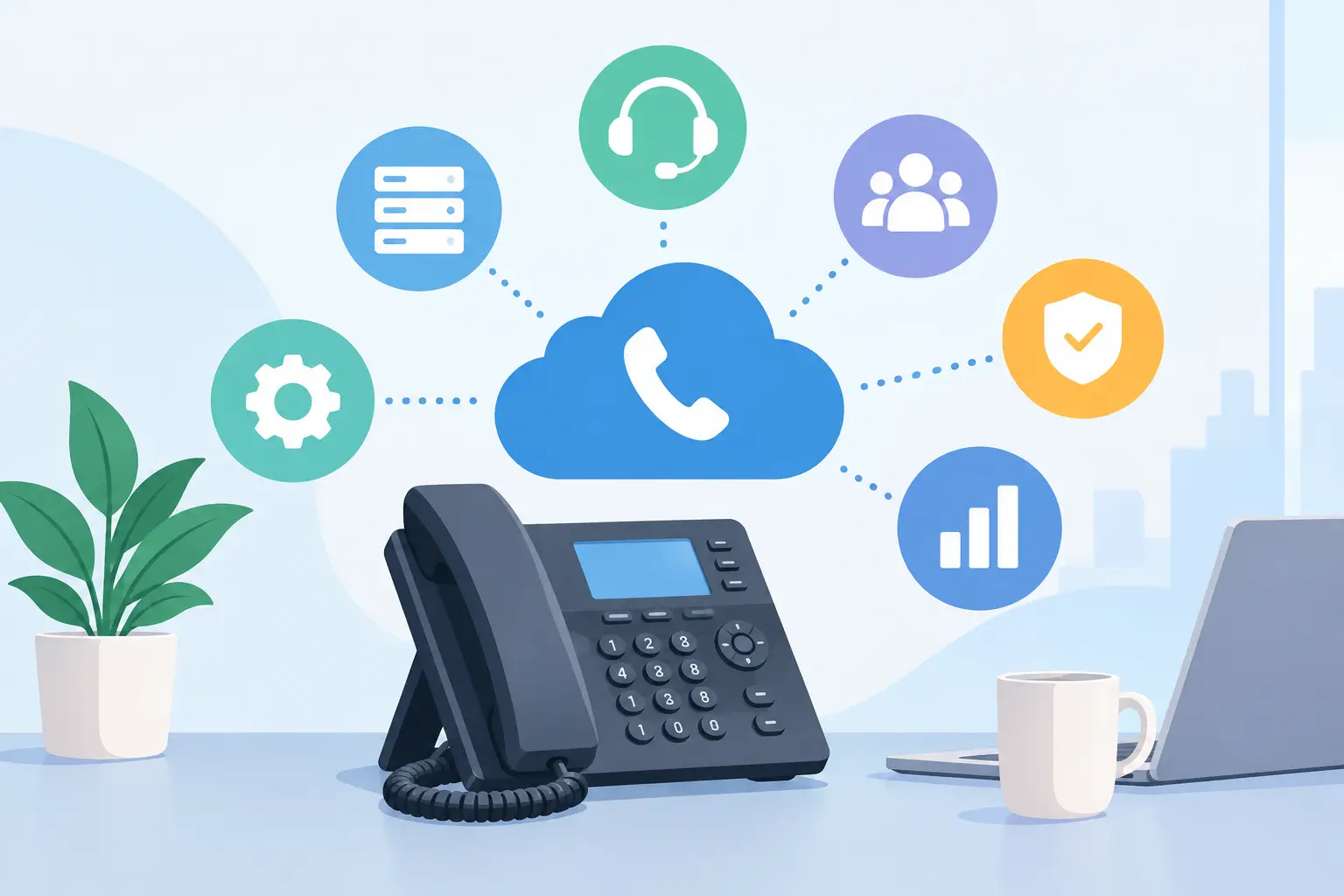
A $25 per-user monthly quote can look compelling until the first invoice includes phone numbers, carrier usage, call recording, implementation services, and a contact center add-on. Cloud telephony costs are not difficult to manage, but they are easy to underestimate when procurement focuses only on the advertised seat price.
For IT and operations leaders, the right question is not simply, What does a cloud phone system cost per user? It is, What will it cost to provide reliable, secure, integrated communications at the scale and deployment model the business requires? That distinction separates a low entry price from a predictable total cost of ownership.
The Core Components of Cloud Telephony Costs
Most cloud telephony budgets begin with recurring software licenses. These are commonly priced per named user, concurrent user, extension, agent, or feature tier. A basic business calling license may cover extensions, voicemail, call forwarding, mobile and desktop applications, and standard administration. Higher tiers often add advanced routing, analytics, API access, CRM integrations, compliance controls, and contact center functions.
The pricing unit matters. A named-user model is straightforward for a distributed sales or knowledge-work team where nearly every employee needs a direct number. Concurrent licensing can be more efficient for shift-based environments, shared workstations, and teams with predictable call patterns. A contact center may also price agents separately from general business users, with additional charges for supervisor tools, workforce management, quality management, or AI-powered capabilities.
Calling charges are the next variable. Domestic calling may be bundled, capped, or subject to fair-use policies. International destinations, toll-free traffic, SMS, emergency services, and high-volume outbound dialing typically have separate rates. Organizations with branches, mobile workforces, or customers across multiple countries should model actual traffic by destination rather than treating unlimited calling as a complete cost estimate.
Phone numbers also add up. Direct inward dial numbers, toll-free numbers, local presence numbers, porting activity, and number inventory all carry operational and financial implications. A national contact center may need numbers in several markets, while a regulated enterprise may require dedicated number management and routing controls.
Do Not Ignore One-Time Implementation Costs
A cloud deployment reduces the capital expense of traditional PBX hardware, but it does not remove implementation work. The amount depends on the environment being replaced and the level of customization required.
A small team moving from basic mobile calling to hosted PBX may need little more than number porting, user provisioning, and call-flow configuration. A larger organization may require identity integration, single sign-on, network readiness assessment, call recording policies, CRM workflow design, site migration planning, and training for administrators, supervisors, agents, and end users.
Data migration can also be a meaningful line item when historical recordings, customer interaction data, call dispositions, or reporting structures must be retained. For enterprises, implementation is not merely a setup fee. It is the cost of reducing disruption while moving a business-critical communications function.
The Deployment Model Changes the Economics
Cloud telephony does not have to mean one shared public-cloud architecture. The most cost-effective option depends on security requirements, internal expertise, compliance obligations, customization needs, and the expected life of the solution.
Multi-tenant cloud services generally offer the lowest initial cost and the fastest time to value. The provider operates the core infrastructure, software updates are centralized, and customers pay a recurring subscription. This model fits many SMBs and distributed teams that prioritize speed, standardization, and limited internal infrastructure management.
Single-tenant, private cloud, or dedicated deployments can cost more because the organization receives greater isolation, control, and configuration flexibility. They may be justified for businesses with strict data-residency requirements, complex integrations, specialized call flows, or security policies that cannot be accommodated in a shared environment.
Self-hosted and on-premises models shift more costs upfront. They can involve software licensing, servers or appliances, high-availability design, carrier connectivity, security operations, upgrades, and internal support resources. Yet for organizations with existing infrastructure, long retention requirements, or a need for maximum control, that investment can produce a lower long-term cost than a purely per-seat service.
The practical lesson is simple: compare models over three to five years, not just by first-year subscription price. A platform that supports hosted, dedicated, and self-managed options gives organizations room to match architecture to business risk instead of forcing a one-size-fits-all decision.
The Cost Drivers That Often Appear Later
Several expenses are easy to miss during an initial evaluation because they sit outside the base telephony license. They become visible after teams begin using the platform at scale.
Integrations are a common example. Connecting telephony to CRM, help desk, identity, collaboration, or business intelligence systems can eliminate manual work and improve reporting. However, some vendors charge separately for premium connectors, API volume, middleware, or professional services. The right comparison is not whether an integration exists, but whether it supports the workflows, data fields, permissions, and reporting outcomes the business actually needs.
Security and compliance may introduce further costs, particularly for call recording, encryption, audit trails, retention policies, role-based access, and regional requirements. These controls are not optional extras for healthcare, financial services, public sector, or organizations handling sensitive customer data. Budgeting for them early prevents expensive redesign later.
Network readiness matters as well. Voice quality depends on more than the cloud platform. Sites may need improved bandwidth, quality-of-service configuration, SD-WAN policies, redundant connectivity, or upgraded headsets. A cloud phone system can reduce infrastructure burden, but it cannot compensate for an unmanaged network path.
Finally, consider administrative overhead. A low software price has less value if every routing adjustment requires a support ticket, custom development, or a specialist consultant. Configurable call flows, clear analytics, centralized administration, and intelligent automation reduce the ongoing labor required to run communications operations.
How to Build a Defensible Budget
Start with a user and usage inventory. Separate general office users, power users, contact center agents, supervisors, administrators, and seasonal staff. Then map the capabilities each group requires. Paying for advanced contact center licensing across the whole company is wasteful, but giving agents a basic calling plan can create productivity and customer experience gaps.
Next, model recurring and one-time costs separately. Your recurring model should include licenses, numbers, carrier usage, messaging, recording storage, support, and third-party integration fees. The one-time model should include implementation, porting, training, network changes, device purchases, and project management.
Use realistic usage assumptions. Review current call detail records, international calling, toll-free volumes, SMS use, recording retention, and peak concurrent call volumes. If the business plans to launch a new service team, enter new markets, or consolidate locations, account for those changes rather than basing the model entirely on last quarter's data.
A useful calculation is:
Three-year total cost of ownership = recurring platform and usage costs + implementation costs + infrastructure changes + internal administration costs - retired system costs.
The final term is essential. A cloud telephony project may retire legacy PBX maintenance, multiple point solutions, expensive PRI circuits, standalone conferencing tools, or manual customer-service processes. Those avoided costs should be documented, but not overstated. Savings only count when a contract, system, or workflow will actually be eliminated.
Where Cost Efficiency Creates Business Value
The best cloud telephony investment does more than replace desk phones. It should improve how calls enter the business, reach the right person, and generate usable operational data. Intelligent IVR, skills-based routing, CRM screen pops, omnichannel queues, and automated follow-up can reduce handle time and abandoned calls while giving managers better visibility into service performance.
That is why a unified platform can be more economical than assembling separate PBX, contact center, messaging, and analytics products. Consolidation can reduce licensing overlap and simplify administration. The trade-off is that buyers must validate depth in each critical area, especially integrations, reporting, security, and deployment control.
RingQ approaches this decision with flexible Cloud PBX, contact center, and Cloud CX deployment options so organizations can align cost structure with their operational and regulatory requirements. For some teams, a fast multi-tenant rollout is the right answer. For others, dedicated or self-managed infrastructure provides the control that protects long-term value.
The strongest budget is not the one with the lowest per-user figure. It is the one that makes call quality, security, customer experience, and future growth predictable enough that communications never become the constraint on the business.
See RingQ in action
Talk to our team and find the right cloud PBX and contact center setup for your business.
Book a demo