RingQ Customer Centric Communications

Meeting Settings


Introduction

This guide explains the available meeting settings in RingQ Meet. Meeting settings allow you to adjust audio and video preferences, manage permissions, and control how a meeting operates.

Settings

1. Login to your RingQ Web App and start a RingQ Meet meeting.

Access meeting settings
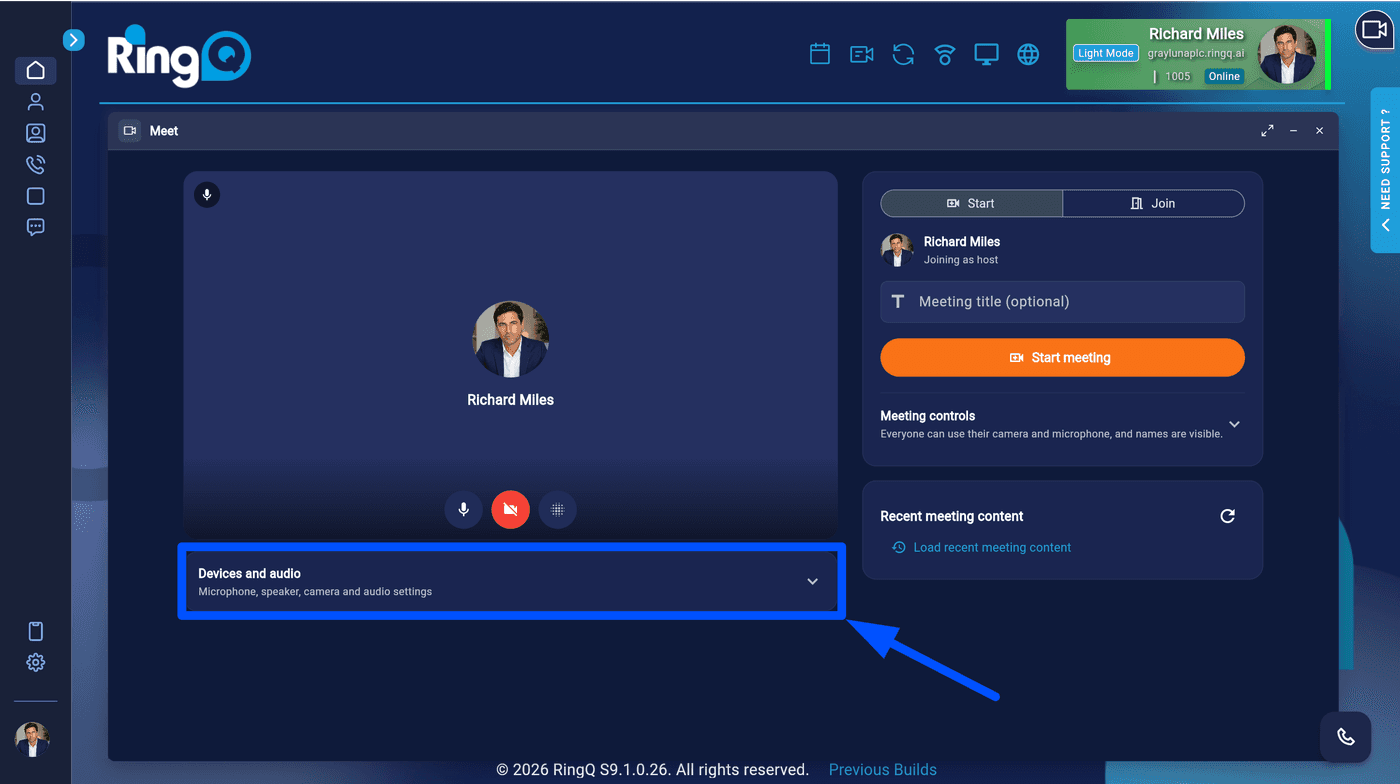
2. Click the “Devices and audio” button before the meeting starts. The available settings are:

  • Microphone – choose the microphone you want to use during the meeting and adjust microphone sensitivity to optimize audio quality.
  • Speaker – Choose whether to use the internal speaker or an external speaker.
  • Camera – This setting allows the user to select and use the available cameras on the device, whether a built-in camera or an external camera.

Microphone, Speaker, and Camera Settings
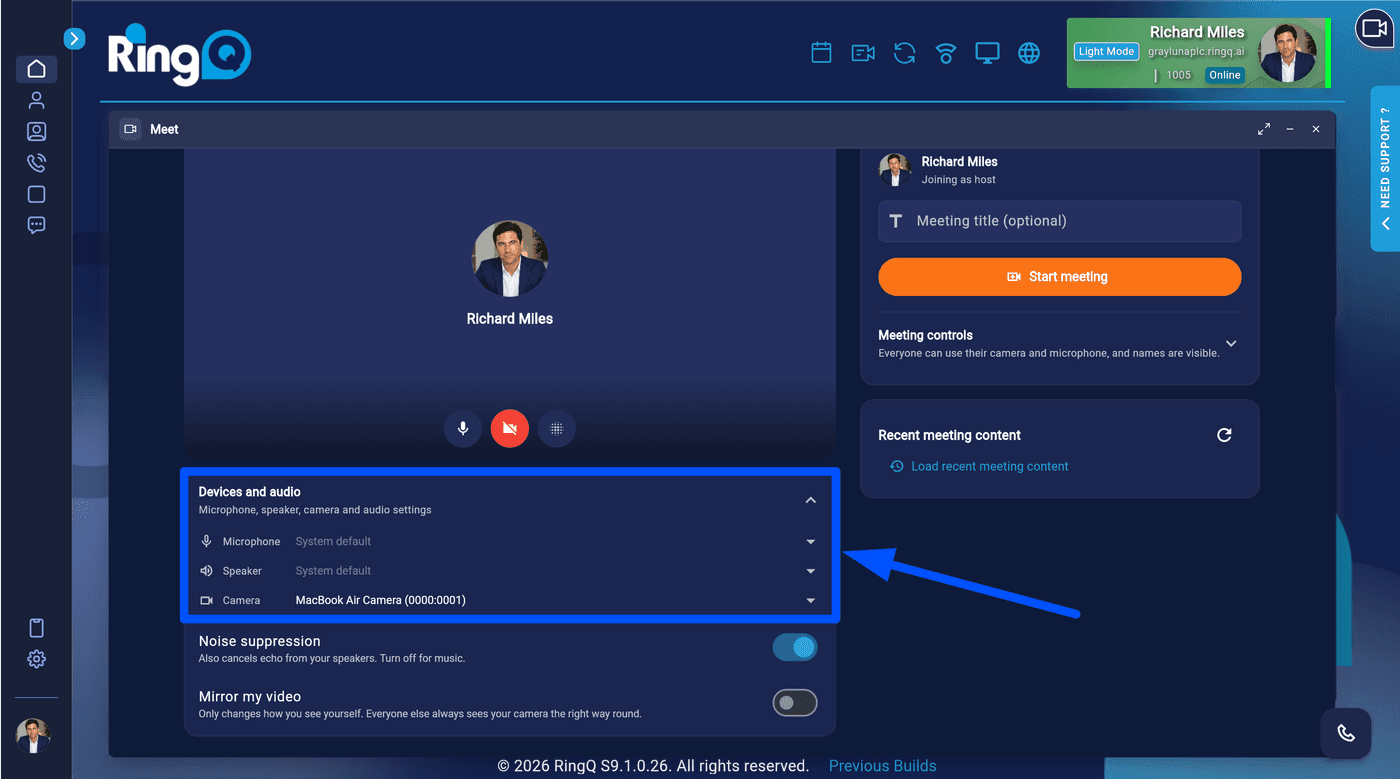
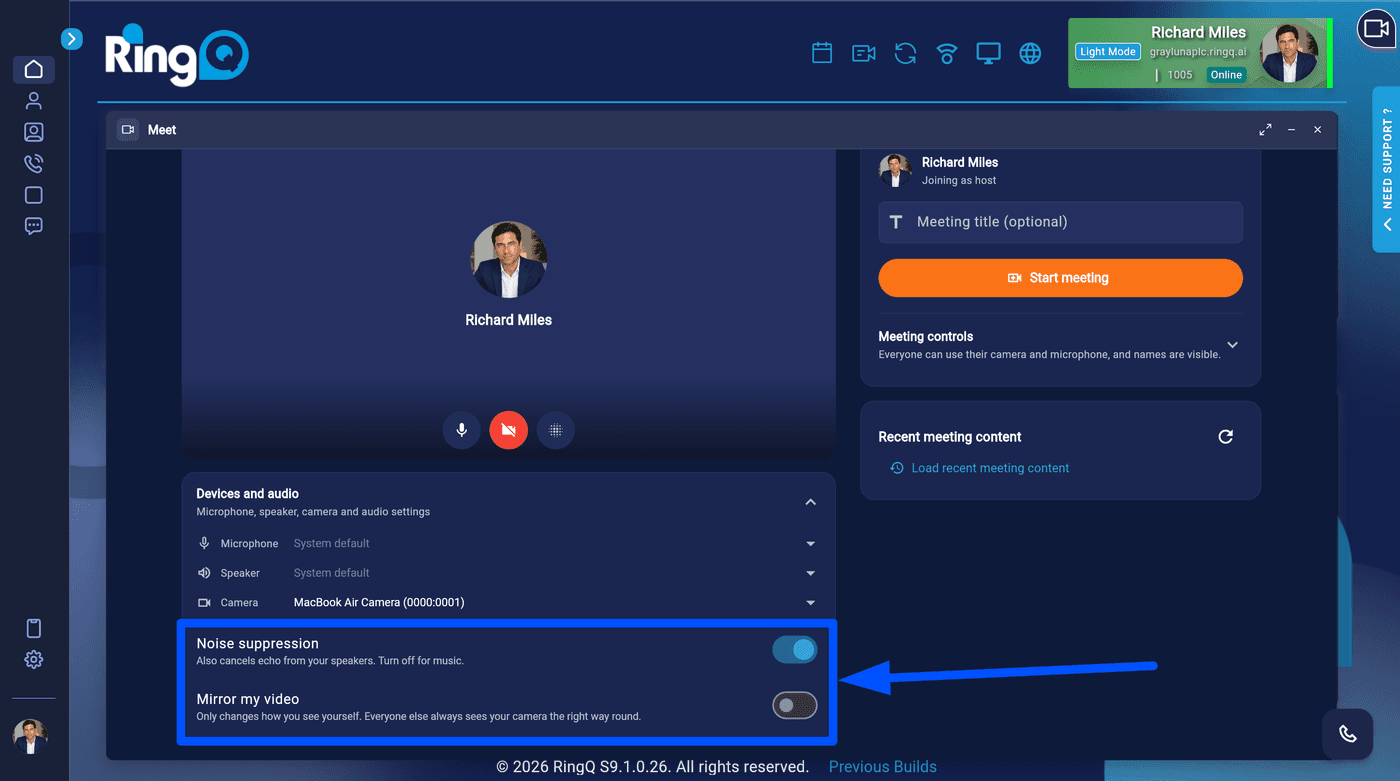
  • Noise Suppression – This feature reduces background noise and cancels echo to enhance audio clarity.
  • Mirror my video – Reverses your video feed so you see yourself correctly. Other participants will always see your camera correctly.
Noise suppression and Mirror my video settings
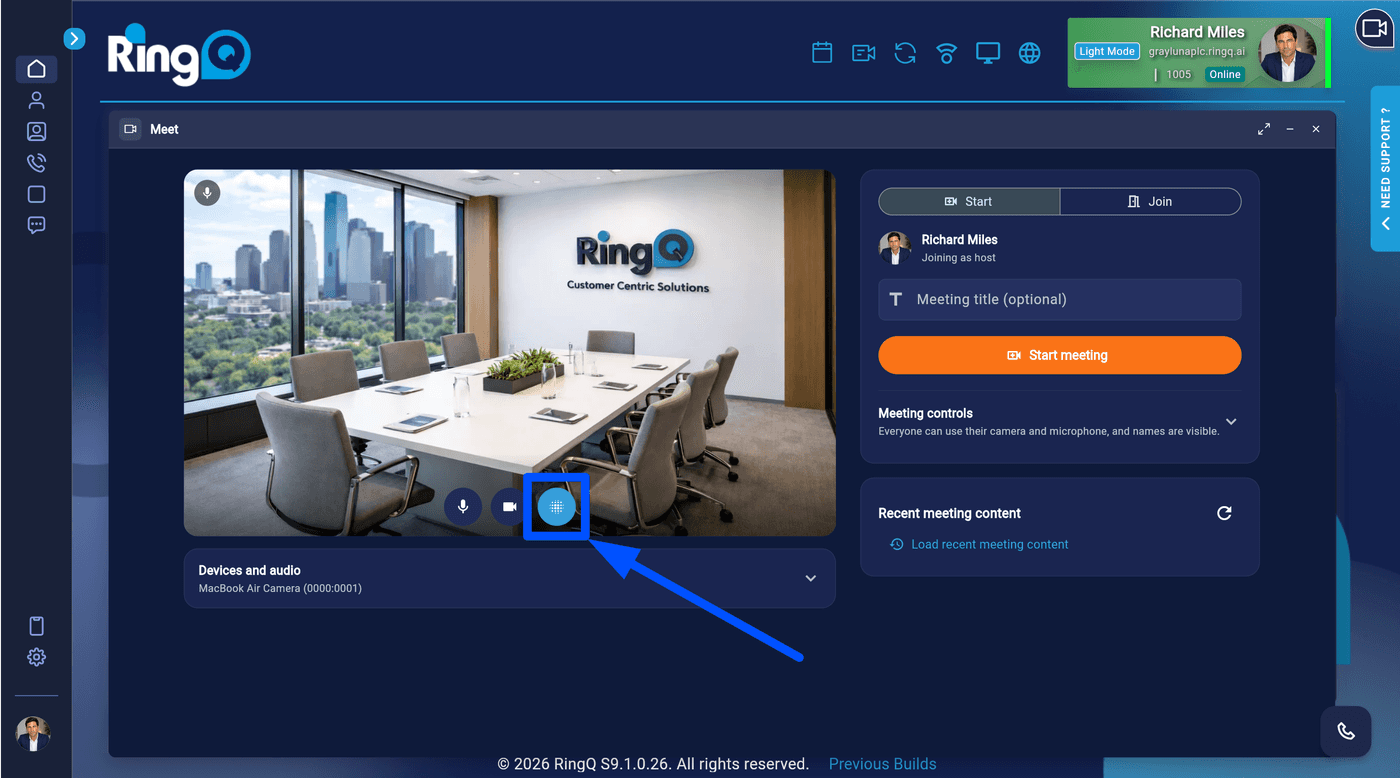
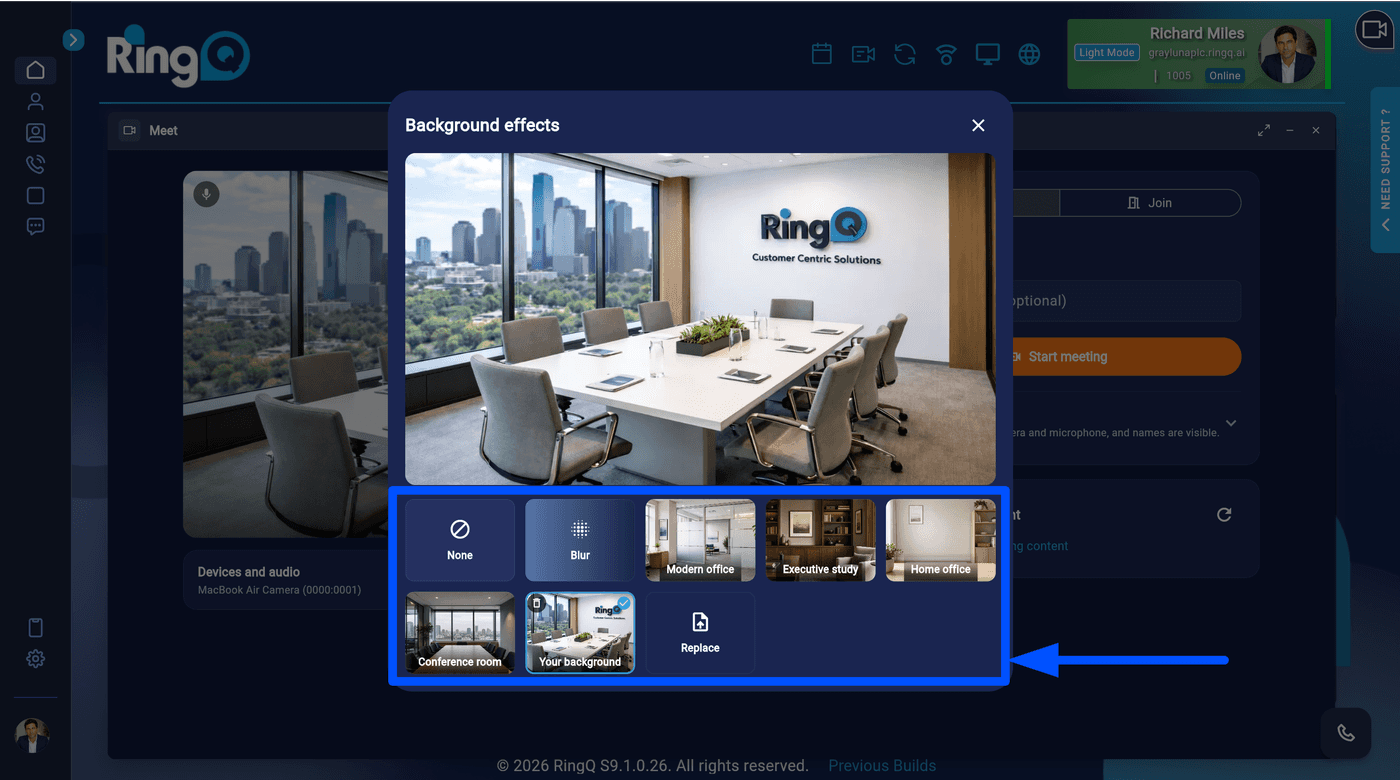
  • Backgrounds Effects – Prior to starting the meeting, you can Blur your background or choose a virtual background from the preloaded images or upload your own custom background.
Background effects
Background effects
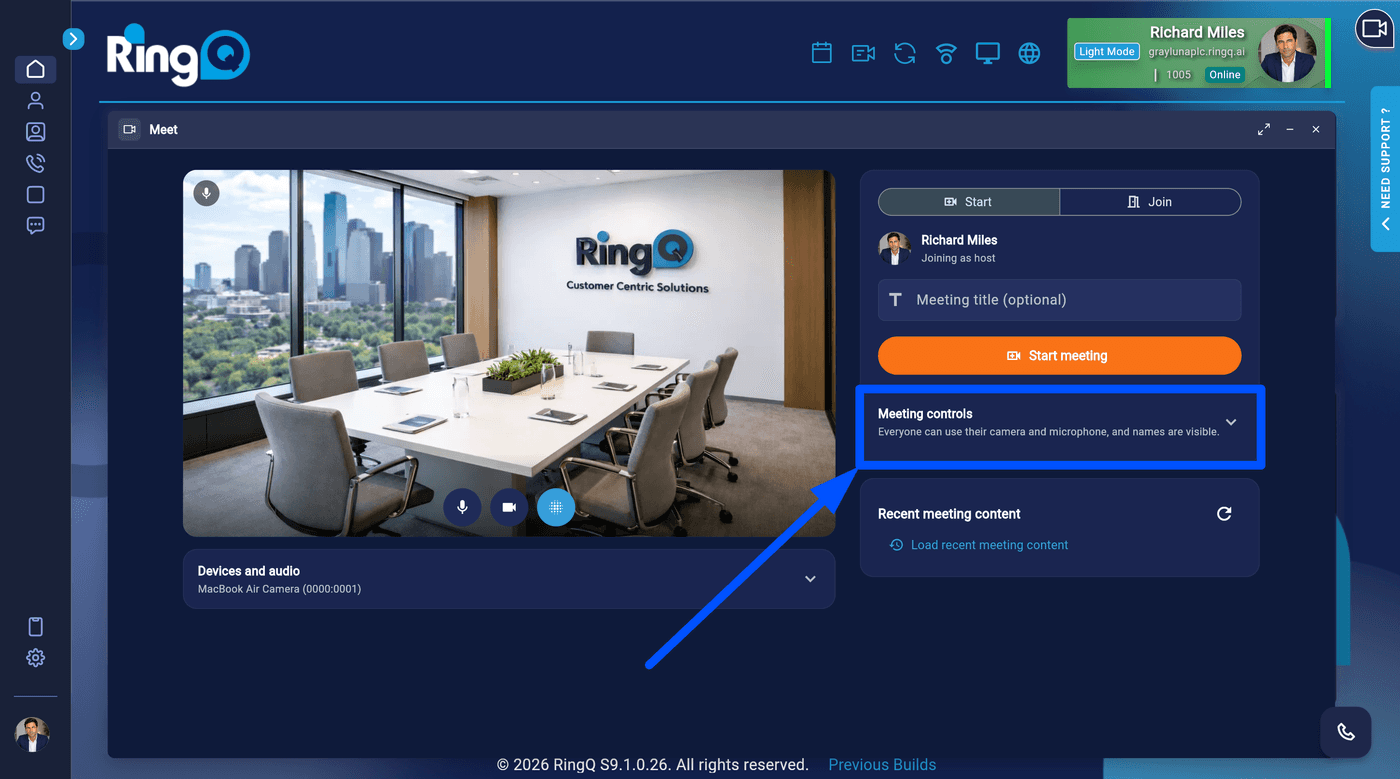
  • Meeting Controls – As a host, you can modify the permissions of participants prior to joining - control camera and microphone settings, admittance policy, name visibility, chat availability, whiteboard editing, and join request sounds.
Meeting control settings

The following settings can be modified by the meeting host, prior to the start of the meeting, to allow full control of participant permissions.
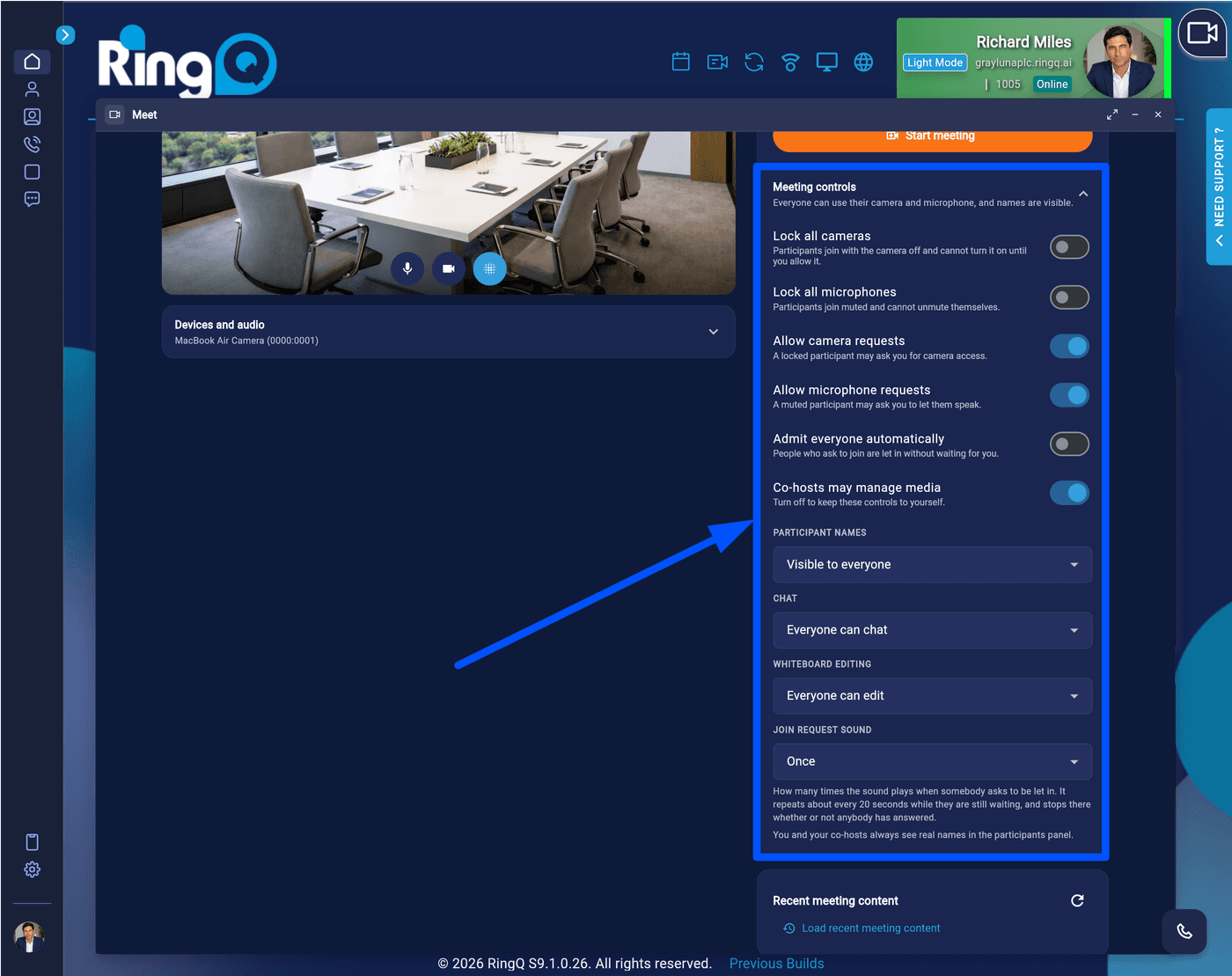
  • Lock all cameras – Participants join with their camera off and cannot turn it on until the host allows it.
  • Lock all microphones - Participants join with their microphone muted and cannot unmute themselves unless the host allows it.
  • Allow camera requests – If cameras are locked, a participant may ask the host for camera access.
  • Allow microphone requests – If microphones are muted, a participant may ask the host for microphone access.
  • Admit everyone automatically – When participants click to join, they bypass the waiting room and are instantly admitted.
  • Co-hosts may manage media – cohosts can share presentations, upload files, and advance slides.
  • Participants names – Control the visibility of participants names – visible to everyone, Hidden from other participants, or hidden from everyone.
  • Chat – manage who has the ability to chat – Everyone can chat or Host and co-host only.
  • Whiteboard editing – Manage who can edit the whiteboard – Everyone can edit or Host and co-host only.
  • Join Request Sound – Control whether the join request sound is off, played once, twice or 3 times prior to admittance.