
Call Deflection That Improves Customer Service
Call deflection reduces avoidable contact volume while improving customer access, agent focus, and service performance across every support channel daily.
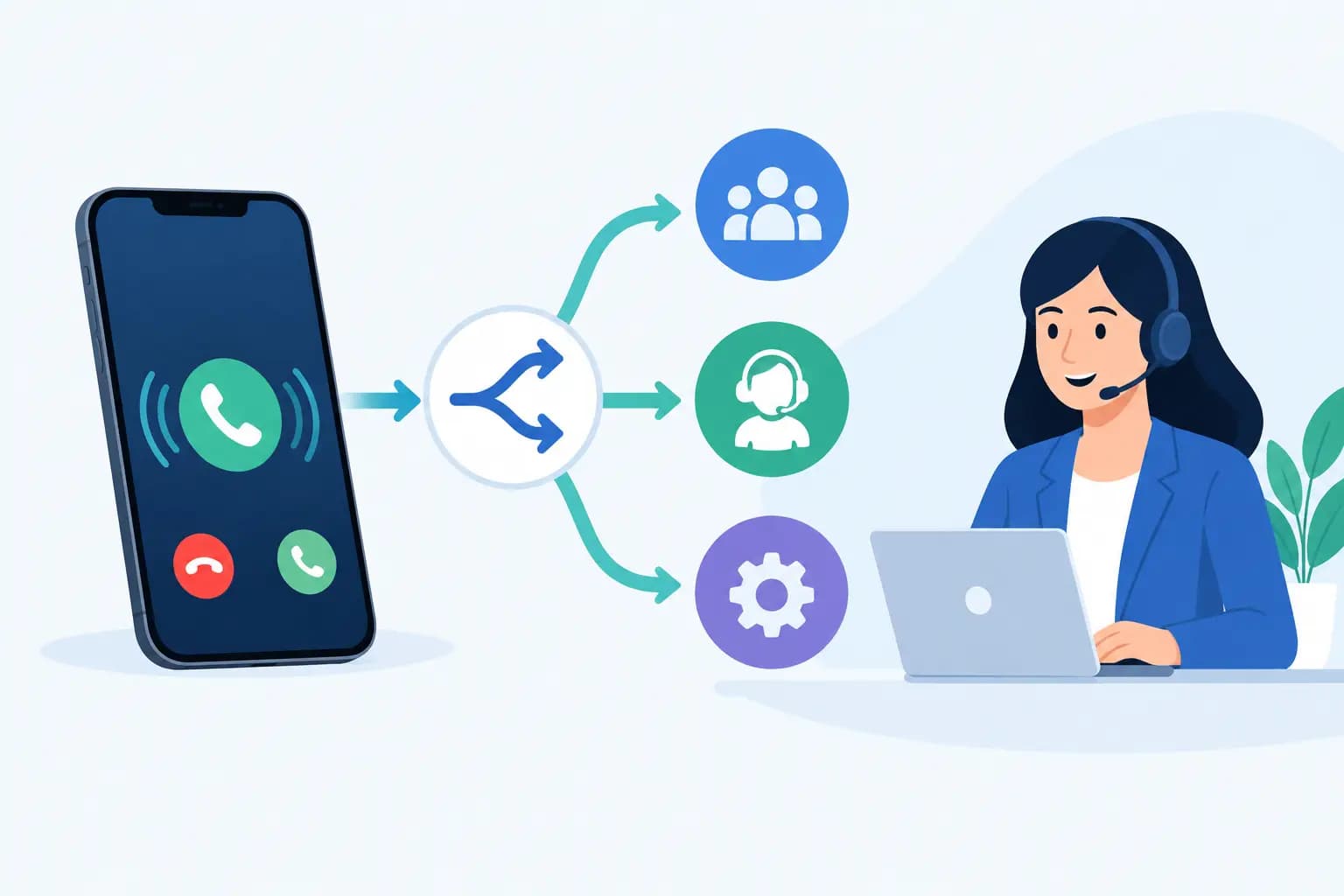
A customer calling to reset a password, check an order status, or confirm business hours does not need to wait in a queue for an agent. Call deflection gives that customer a faster path to resolution while preserving live-agent capacity for issues that require judgment, empathy, or account-level action.
For contact center leaders, the objective is not to make customers go away. It is to remove unnecessary effort from routine interactions. Done well, call deflection lowers cost per contact, improves service levels, and gives agents more time to resolve complex cases correctly. Done poorly, it becomes a maze of menus that pushes customers toward repeat calls and escalations.
What Is Call Deflection?
Call deflection is the practice of directing callers from a live voice queue to a more appropriate self-service or digital channel. That destination may be an AI-powered IVR, automated voice response, web chat, SMS, a customer portal, a knowledge base, or a transactional workflow such as payment processing or appointment scheduling.
The distinction matters: deflection is not the same as abandonment. A caller who hangs up because wait time is excessive has not been served. A caller who receives a secure SMS link to track a delivery, completes the task, and receives confirmation has. The first outcome damages customer experience and obscures demand. The second resolves demand through a lower-effort channel.
This makes call deflection an operational design decision, not simply a queue-management tactic. It requires teams to identify why customers call, determine which intents can be handled reliably outside a live conversation, and offer an escalation path when automation is not enough.
Why Contact Centers Need Call Deflection
Voice remains essential for urgent, sensitive, high-value, and complicated customer issues. It is also the most resource-intensive channel for high-volume, repeatable requests. When every request enters the same voice queue, agents spend a meaningful portion of the day handling interactions that could have been completed in seconds through automation.
The operational consequences are immediate. Average speed of answer rises, service-level targets become harder to meet, and skilled agents have less availability for retention risks, technical troubleshooting, billing disputes, and sales opportunities. During seasonal peaks or service disruptions, the pressure compounds quickly.
Effective deflection changes the workload profile. Customers receive immediate access to information and transactions at any hour, while supervisors can assign agent capacity to work where a human conversation creates the most value. This can also improve first-contact resolution, provided that the automated route has the right data, clear language, and a direct handoff to an agent when needed.
There is a cost benefit, but it should not be the only measure. An organization can reduce inbound calls while making its experience worse if customers are repeatedly forced into channels that cannot solve their problem. The better target is successful containment: the percentage of eligible interactions completed without an agent, with no avoidable repeat contact shortly afterward.
Which Calls Should Be Deflected?
The best candidates are high-volume, predictable requests with a defined answer or transaction. Common examples include account balance inquiries, payment due dates, order and shipment tracking, store hours, appointment confirmations, password resets, and basic policy questions.
A useful test is whether the request can be resolved accurately with information the business already has and whether the customer can complete the process without explaining context multiple times. If both are true, it is a strong automation candidate.
Not every call belongs in a self-service flow. Fraud reports, cancellation requests, medical or financial concerns, account access failures, emotionally charged complaints, and multi-step technical cases usually need a human option early in the journey. The same is true for customers who have already tried self-service. Repeating the same automated prompt after a failed attempt signals that the system is optimizing for containment rather than resolution.
Eligibility can also vary by customer segment. A straightforward shipment update may be ideal for deflection, while a shipment exception for a premium account may warrant proactive agent outreach. Call flows should reflect business value and customer context, not just the intent label.
Build a Deflection Experience That Resolves Work
A successful strategy begins with contact reason data. Review call recordings, IVR selections, disposition codes, chatbot transcripts, and repeat-contact patterns to identify the reasons driving volume. Do not rely only on top-level categories such as “billing” or “support.” The actionable insight is usually one level deeper: a duplicate invoice request, an address-change question, or a payment-posting status inquiry.
Start with the highest-volume, lowest-risk intents
Choose a small number of use cases where resolution is clear and data access is dependable. A shipment-tracking flow, for example, should retrieve current status from the system of record, present the result in plain language, and offer a text message for customers who want the details on their phone.
Starting narrowly exposes integration gaps and language problems before they affect a broad portion of the customer base. It also gives operations teams a measurable baseline for containment, transfers, customer effort, and repeat calls.
Offer the right channel at the right moment
A caller may prefer voice for the initial request but be better served by a digital continuation. SMS is effective for secure links, tracking information, form completion, and payment workflows because it keeps the interaction accessible after the call ends. Chat works well when the customer needs guided navigation or document sharing. A portal is valuable for repeat account tasks and deeper self-service.
The invitation must be specific. “Visit our website” creates work. “I can text you a secure link to view your balance and make a payment” explains the value and the next action. Customers should always understand what will happen if they accept the option.
Make escalation intentional
Every automated flow needs a controlled path to a person. The trigger may be a low confidence score from AI, repeated failed authentication, a negative sentiment signal, or a customer request to speak with an agent. When the interaction transfers, pass the caller’s identity, intent, and prior steps to the agent desktop. Asking the customer to begin again defeats the purpose of the automation.
AI-powered IVR can make this routing more natural by recognizing spoken intent rather than forcing callers through rigid keypad trees. But AI should operate within defined business rules, secure data boundaries, and clear fallback logic. Automation confidence is not a substitute for governance.
The Technology Requirements Behind Reliable Deflection
Deflection works only when the communication platform and business systems operate as one service environment. The IVR needs real-time access to CRM records, order systems, payment platforms, scheduling tools, and knowledge sources. If data is stale or disconnected, self-service provides inaccurate answers faster, which is not an improvement.
Enterprise teams should evaluate several capabilities: omnichannel orchestration, API and CRM integration options, authentication controls, recording and audit requirements, reporting, and deployment flexibility. Organizations with regulatory, data residency, or architecture constraints may require private, self-hosted, or single-tenant environments rather than a standard multi-tenant cloud model.
Reliability is equally central. A deflection path should not become a dead end when an integration slows down or an external system is unavailable. Define fallback behavior in advance. That may mean offering an estimated callback, routing to a specialized queue, or providing a status message that sets realistic expectations.
For distributed operations, a unified communications and contact center platform also helps maintain consistent workflows across locations, teams, and channels. RingQ supports this model by bringing PBX, contact center, omnichannel engagement, and AI-enabled automation into an architecture that can align with different infrastructure and control requirements.
Measure Resolution, Not Just Fewer Calls
A lower inbound-call count can be misleading. Demand may have moved to another channel, or customers may simply be giving up. Leaders need a measurement framework that tracks the complete customer journey.
Review containment rate alongside repeat contact within 24 to 72 hours, transfer rate, abandonment, average handle time for escalated calls, customer satisfaction, and digital completion rate. For transactional flows, measure whether the customer actually completed the payment, update, booking, or form rather than only whether they clicked the link.
Agent feedback is also valuable. If agents regularly receive callers who are frustrated by a particular automated path, that is evidence to review the flow, knowledge content, or integration data. Conversation analytics can identify common failure points at scale, including phrases that indicate confusion, failed authentication, or unmet intent.
The right benchmark depends on the use case. A simple account-status inquiry may support high containment. A complex benefits or technical-support journey may properly escalate more often. The target is not maximum automation. It is the highest level of automation that preserves accuracy, access, and trust.
Call deflection earns its value when customers get answers with less effort and agents receive the context and time needed for the conversations only people can handle. Build around that standard, and reduced voice volume becomes a byproduct of better service rather than the sole objective.