AI in Business Phone Systems: Game-Changer or Just Another Buzzword?
Most businesses just want their phone to ring, route calls and take a message. So does your business actually need AI in its phone system, or is it a buzzword looking for a problem to solve?

Let's be honest. Most businesses don't ask much of their phone system. They want it to ring when someone calls, send calls to the right person, take a message when nobody answers, and ideally stop customers from shouting, "Hello? Is anyone there?"
Simple enough, right?
Yet, in an industry increasingly filled with talk of artificial intelligence (AI), automation and digital transformation, the humble business phone system is becoming much more sophisticated. But does your business actually need all that intelligence, or is AI just another buzzword looking for a problem to solve?
How Do Most Businesses Really Use Their Phone Systems?
For many businesses, a phone system is still primarily a tool for making and receiving calls. Employees answer enquiries, transfer customers between departments, check voicemails and return missed calls when they find a spare moment.
A typical day might involve a receptionist juggling three incoming calls, a sales team missing a promising lead, and a customer being transferred to someone who is, unfortunately, out of the office until Thursday.
These aren't particularly complicated problems, but they can cost businesses time, money and customer goodwill.
Traditional phone systems have done a perfectly respectable job of connecting people. The question is whether they could do more to help businesses work smarter.
So, Where Does AI Come In?
AI is increasingly being built into business communications, offering features such as call transcription, automated summaries, intelligent call routing and insights into customer interactions.
Used well, these features can make a genuine difference.
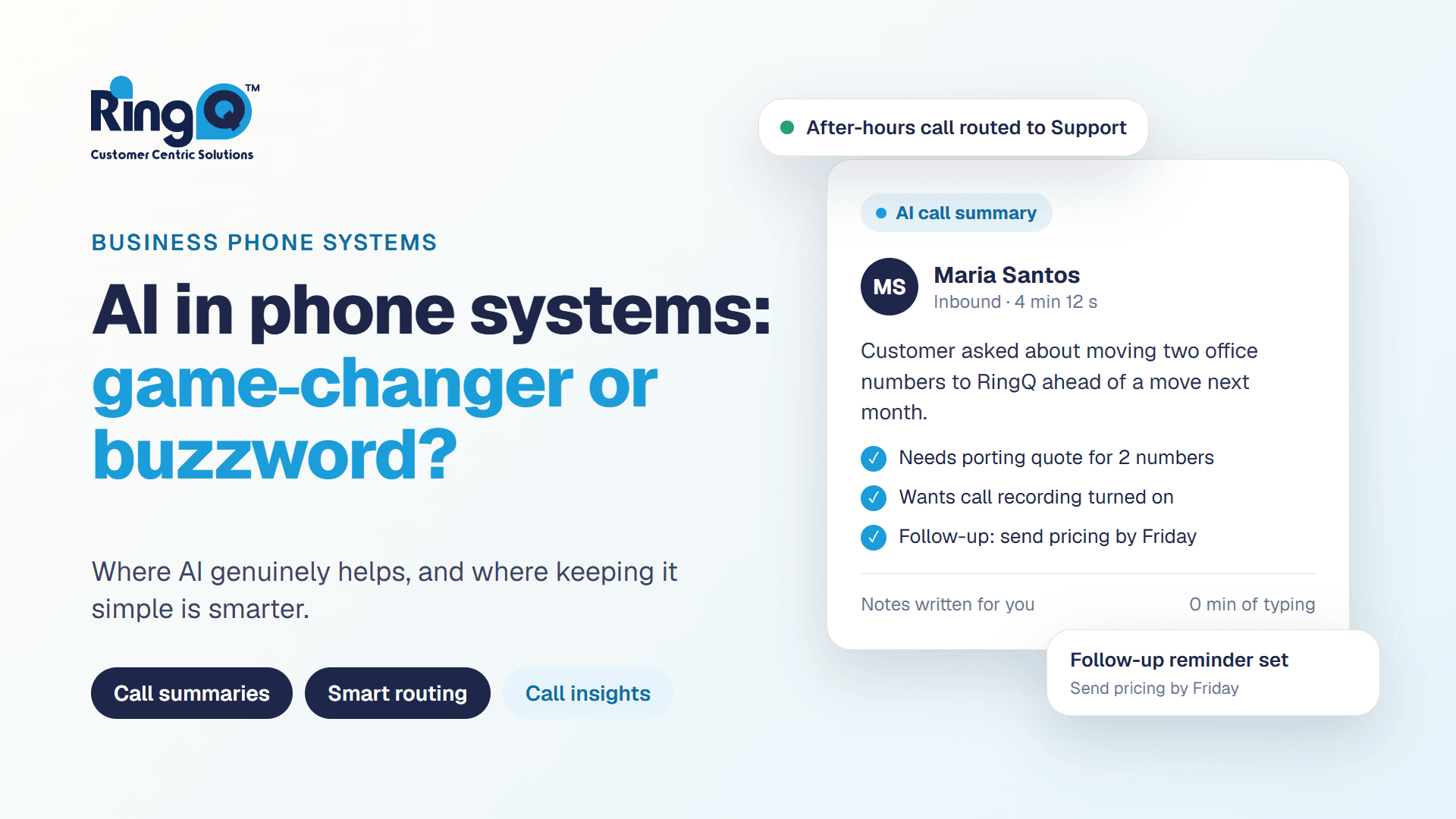
Imagine finishing a customer call without having to spend the next ten minutes writing notes. AI can summarize the conversation, highlight key points and help employees keep records up to date.
Or consider a business receiving calls outside office hours. Intelligent call handling can help direct callers to the right service, provide useful information or capture enquiries for follow-up.
For managers, call analytics can help identify recurring customer issues, understand call volumes and spot opportunities to improve service.
None of this is magic. It's about removing repetitive tasks, making information easier to access and helping people focus on work that actually requires a human being.
And yes, that includes drinking coffee without missing an important customer enquiry.
When AI Becomes Just Another Buzzword
Of course, not every business needs every AI feature available.
If your team makes a handful of calls each day and your existing system handles them efficiently, investing in sophisticated AI tools might deliver very little practical benefit.
There's also the risk of adopting technology simply because everyone else is talking about it. A feature that looks impressive in a presentation isn't necessarily useful in your day-to-day operations.
AI should solve a real problem, not create three new ones.
The important questions are straightforward:
- Are we missing calls or losing potential customers?
- Are employees spending too much time on administration?
- Could better call insights improve our customer service?
- Will automation save time without making the customer experience feel impersonal?
If the answers reveal genuine problems, AI may be worth exploring. If not, there's no shame in keeping things simple.
The RingQ Perspective: Technology Should Work for You
At RingQ, the conversation shouldn't start with how much AI your phone system contains. It should start with what your business needs to achieve.
A good business phone system should make communication easier, help customers reach the right people and give employees the tools to work efficiently.
AI can enhance that experience by reducing manual work, improving visibility and helping businesses respond more effectively. But it should complement people, not complicate their working day.
Ultimately, the best technology isn't necessarily the most advanced. It's the technology that quietly does its job, solves real problems and makes life easier for everyone involved.
So, is AI in business phone systems a game-changer or just a buzzword?
It can be either. The difference comes down to how you use it.
After all, your customers probably don't care whether their call was handled by artificial intelligence. They care that someone answered, understood their problem and helped them solve it.
And that's a pretty intelligent place to start.
See RingQ in action
Talk to our team and find the right cloud PBX and contact center setup for your business.
Book a demo