A guide to ring/call distribution strategies for Queues in RingQ
When a call arrives at a RingQ Queue, the system needs a rule for deciding which logged-in agent gets offered the call, and in what order. This rule is called the Call (Ring) Strategy, and it is configured on the Summary tab of the Queue setup screen.
RingQ offers ten strategies: six standard strategies that treat all agents in the queue as one group, and four “Skill Based” equivalents that route within prioritized skill groups first, only falling back to lower-priority groups when no agent in a higher group is available. Choosing the right strategy affects how evenly work is spread, how quickly calls are answered, and whether particular agents (e.g. specialists) are favored.
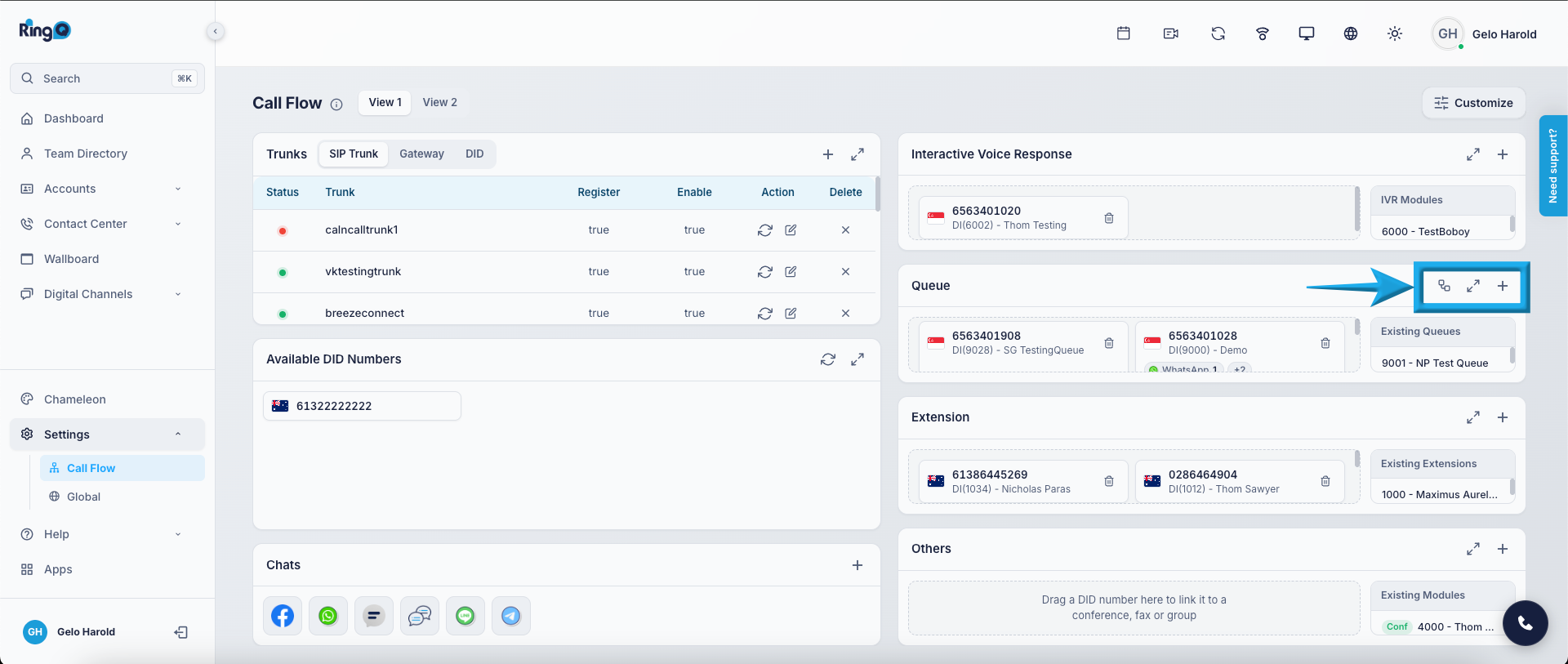
The Call Strategy is set when creating or editing a Queue. From the admin portal, open the Queue portal and click the add (+) icon to create a new queue.
Select an existing queue to edit it, this opens the Queue dialog on the Summary tab, where you’ll find the Queue Extension and Queue Name fields.
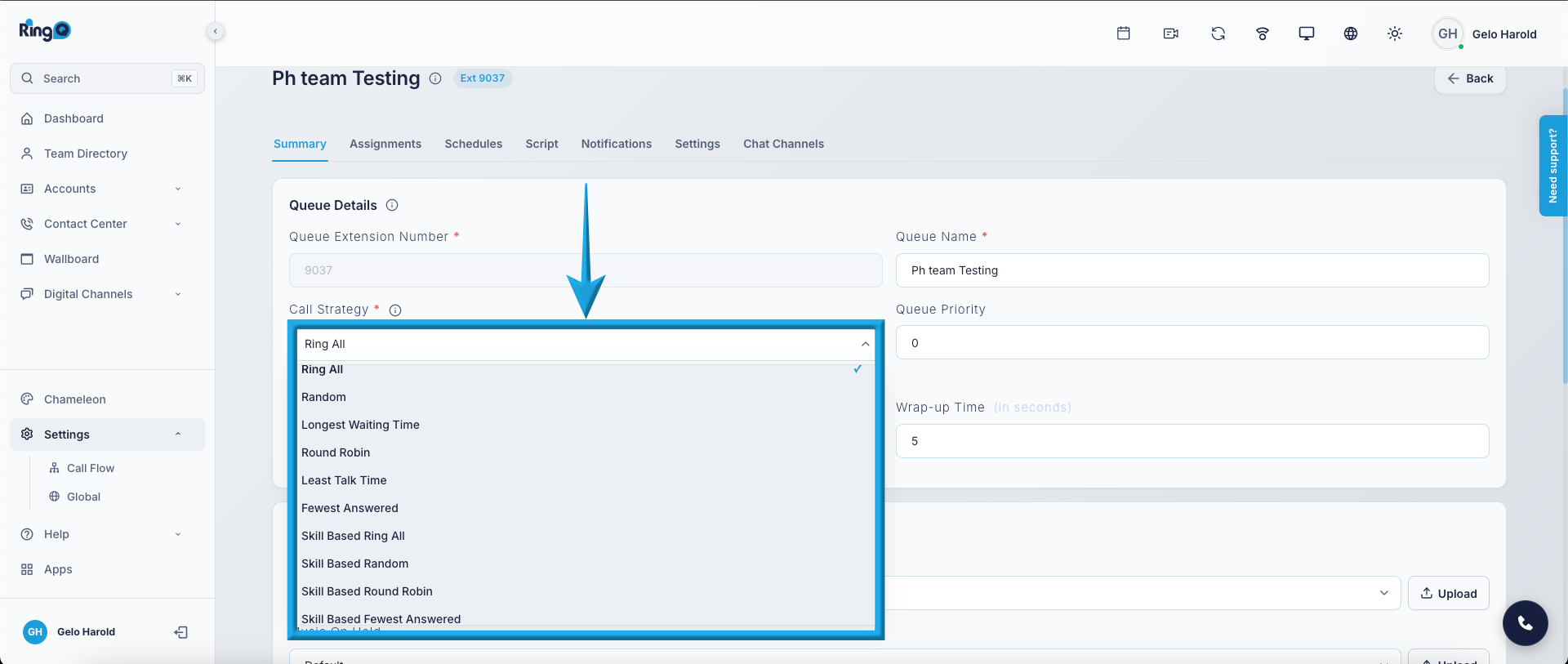
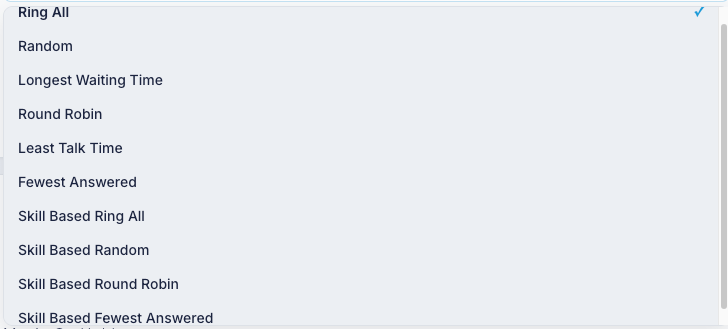
Below those fields, select the desired strategy from the list of ten options shown (each with an info icon for more detail) to choose one of the strategies described above.
These strategies distribute calls across all agents assigned to the queue, with no distinction between skill levels.
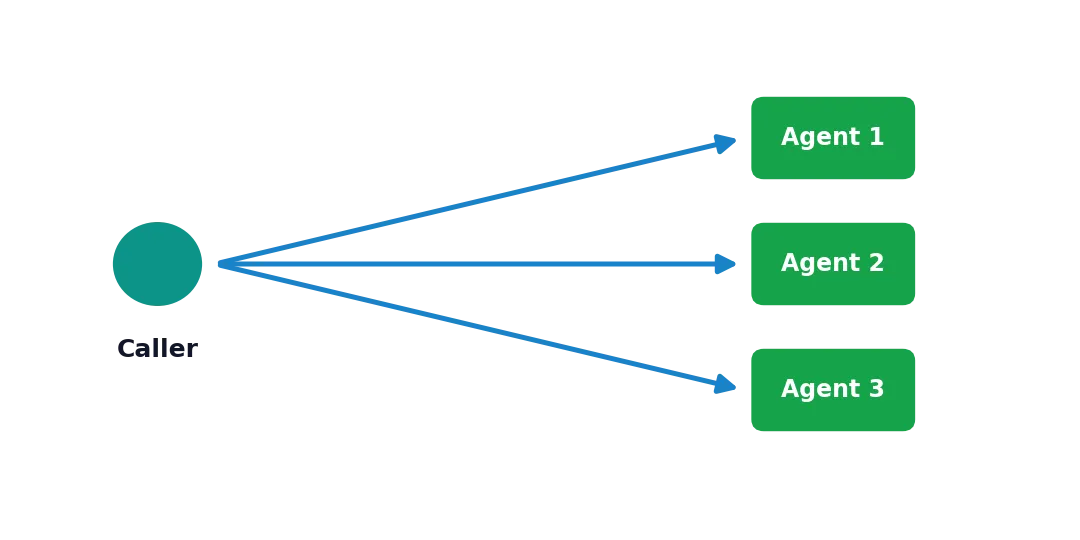
Rings every available agent in the queue at the same time. Whoever picks up first takes the call.
Tip: Best kept to smaller queues — once a team grows past a handful of agents, simultaneous ringing gets disruptive fast.
Picks one available agent at random to ring for each incoming call.
Tip: If you need to demonstrate fairness in reporting, pair this with call-count reports rather than relying on randomness alone.
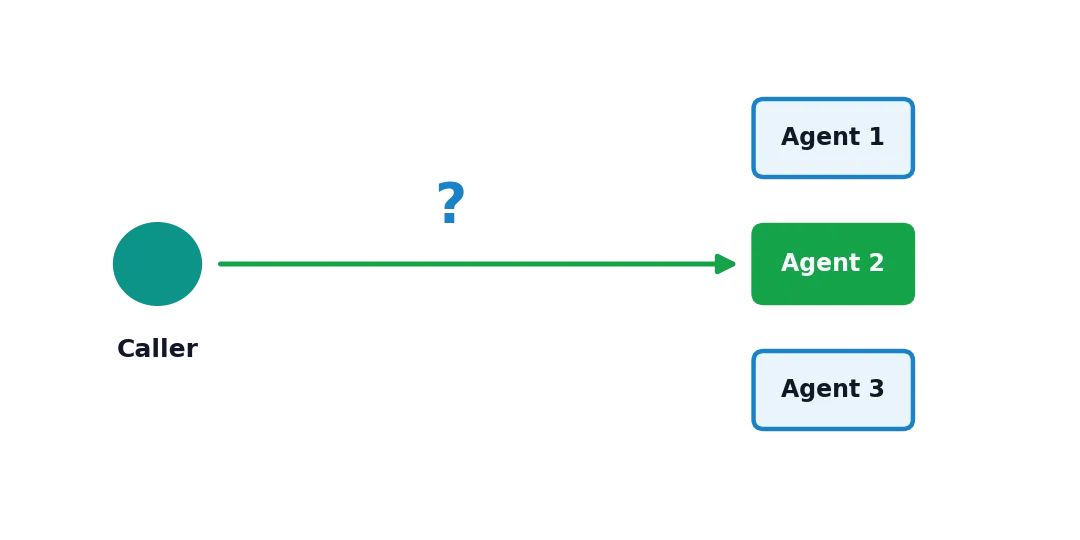
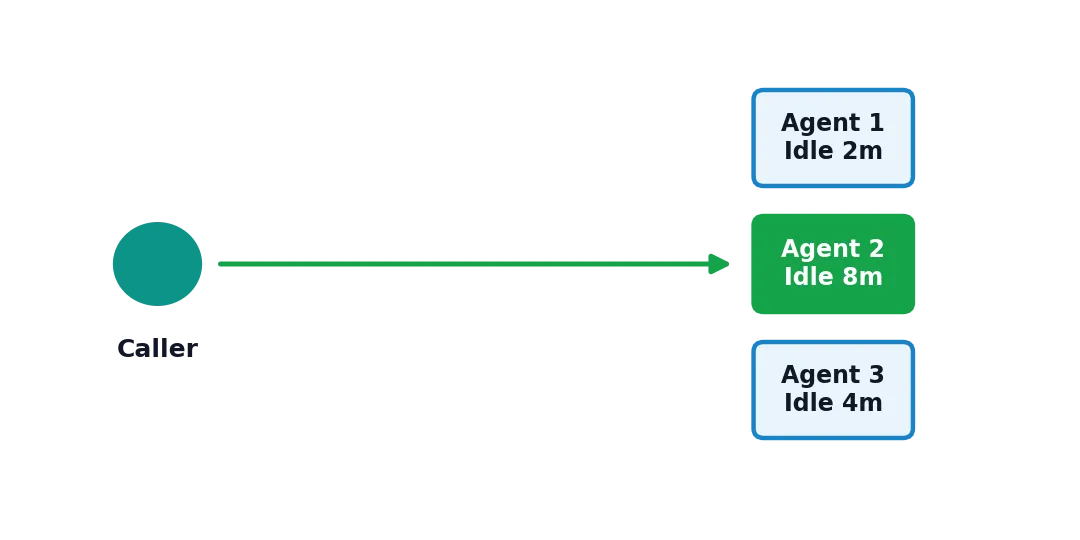
Rings the agent who has been idle (not on a call) for the longest amount of time.
Tip: Works best when agents log in and out consistently, since a freshly logged-in agent starts at zero idle time.
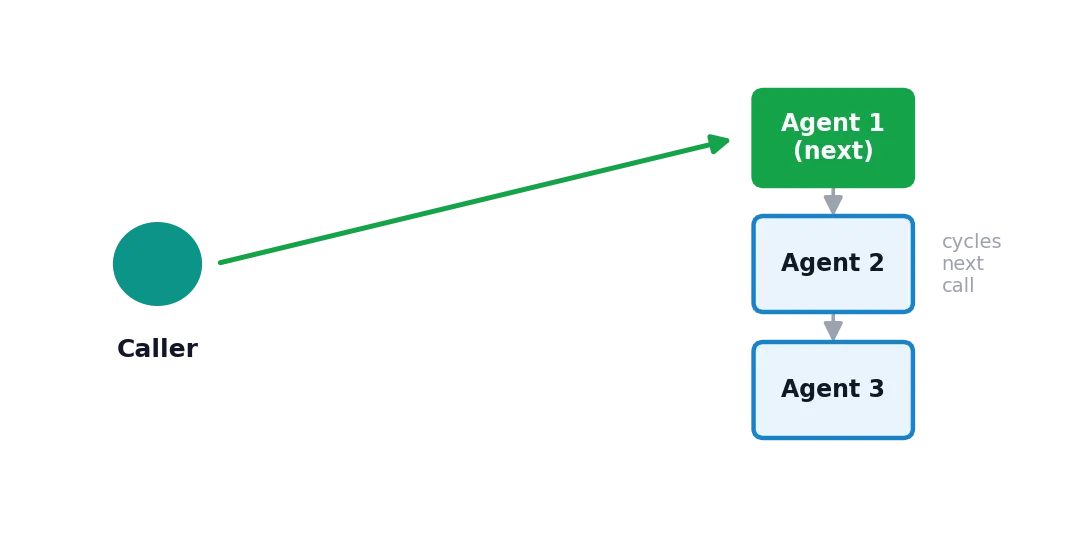
Cycles through agents in a fixed sequence: the first call goes to Agent 1, the next to Agent 2, and so on, wrapping back to the start.
Tip: Works best with a stable agent list — frequently adding or removing agents disrupts the rotation order.
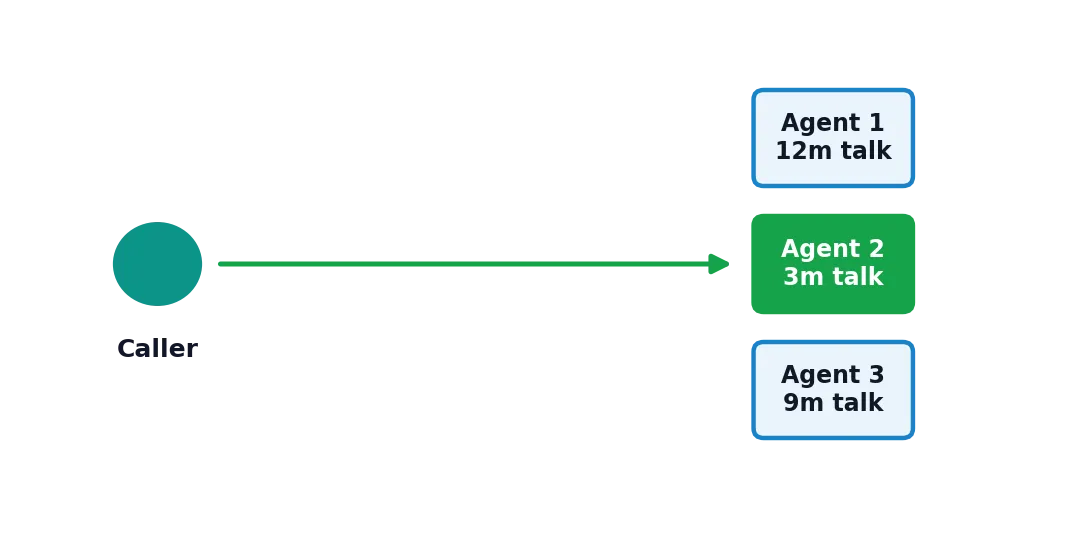
Rings the agent with the lowest total talk time (accumulated call duration) in this queue.
Tip: Watch for this skewing toward newer agents, who naturally have lower accumulated talk time early on.
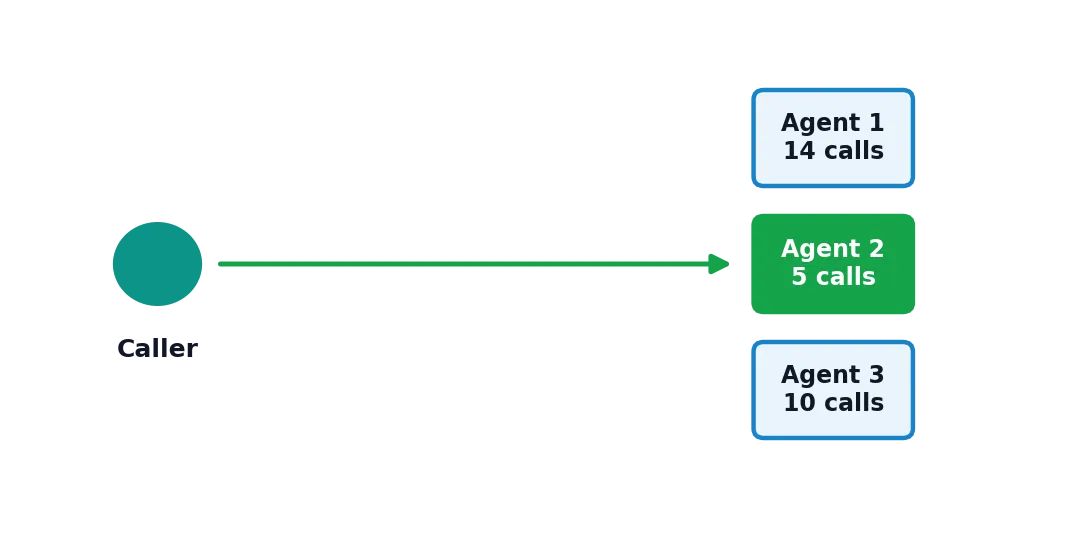
Rings the agent who has answered the fewest number of calls in this queue.
Tip: Review call-count balance periodically, since a busy shift on one day can carry an advantage or disadvantage into the next.
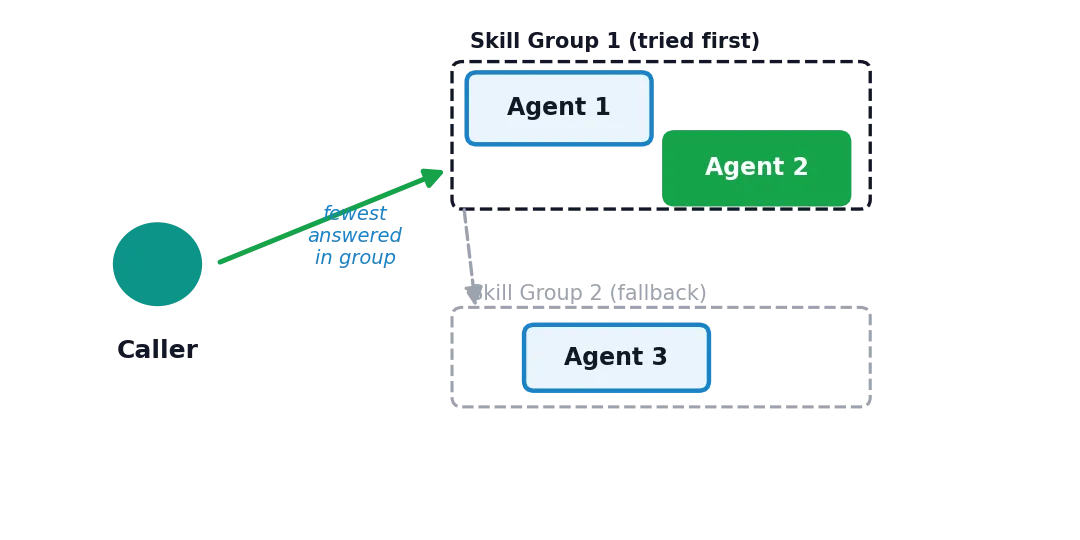
Skill Based strategies apply the same underlying logic as their standard counterparts, but agents are first organized into prioritized skill groups. RingQ always tries to route the call within the highest-priority skill group first, and only moves on to the next group if no agent there is available.
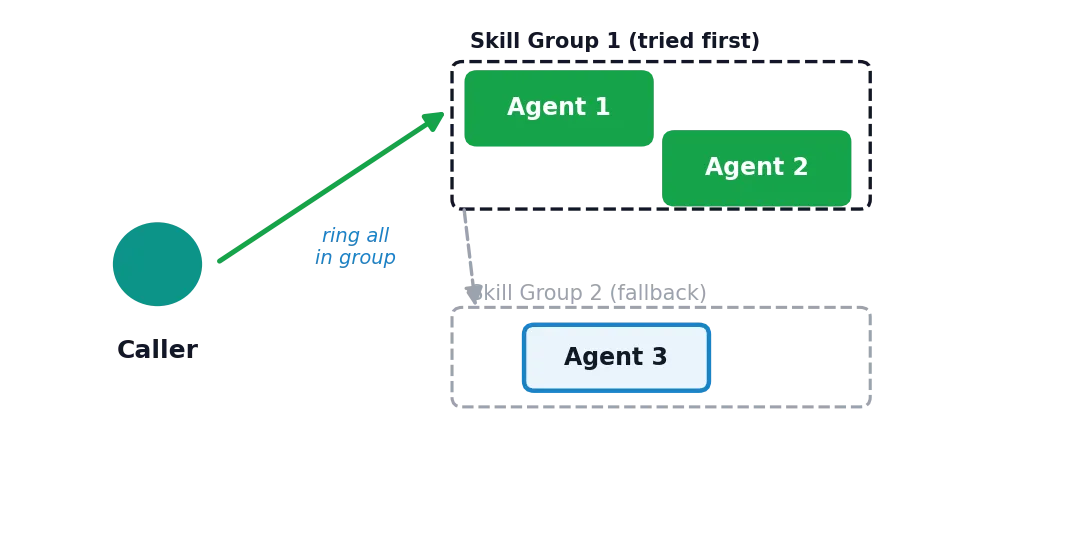
Rings all available agents within the current (highest-priority) skill group simultaneously. Falls back to the next skill group only if nobody in the current group is available.
Tip: Keep top-priority skill groups appropriately sized — an oversized group loses the benefit of prioritizing your best-fit agents.
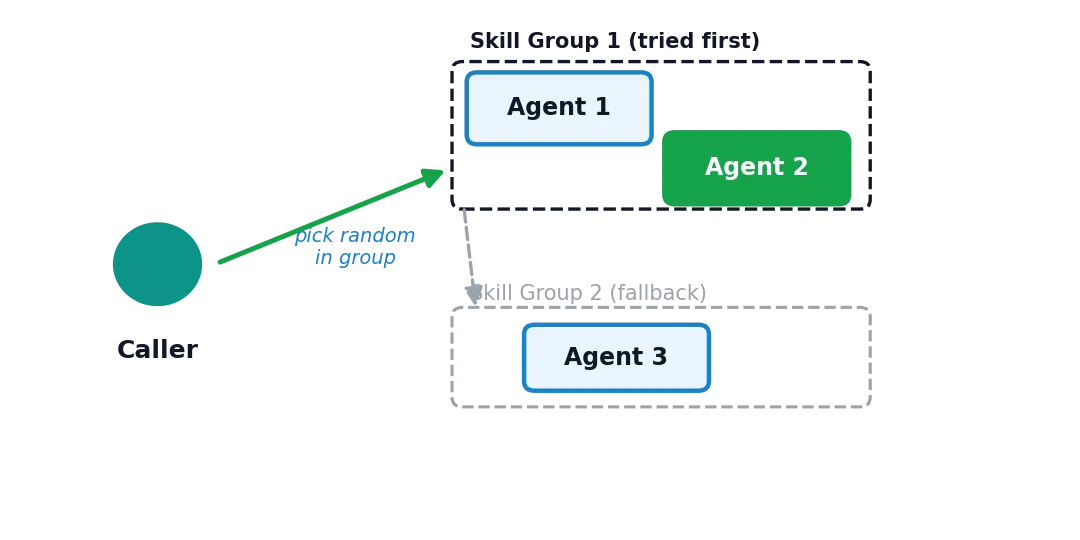
Randomly selects an available agent from within the current skill group before considering the next group.
Tip: Make sure each skill group has more than one available agent, or “random” within that tier becomes a fixed choice.
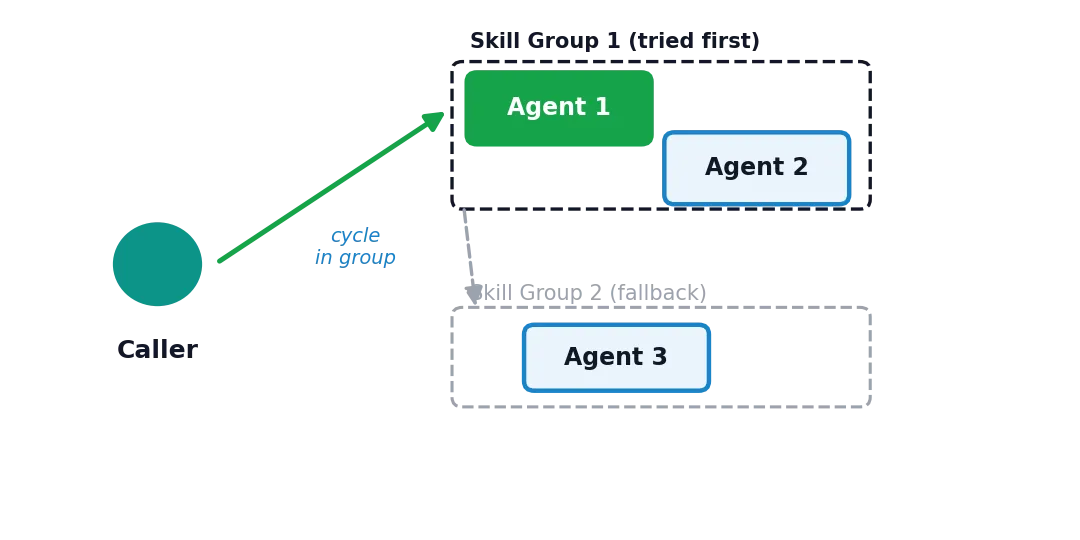
Cycles sequentially through agents within the current skill group, starting from the highest-priority group.
Tip: Set agent order within each skill group deliberately if you want certain specialists to get first crack at calls in their tier.
Rings the agent who has answered the fewest calls, starting with agents in the highest-priority skill group.
Tip: Compare call counts within each skill group separately, not queue-wide, since fairness is tracked per tier, not across the whole queue.
A few practical pointers for picking and setting up a strategy.
