
This guide outlines a clear, step-by-step process for configuring Telegram Chat in the RingQ Web App. By following these instructions, you will integrate Telegram messaging with your RingQ platform, allowing it to reliably send and receive chat messages through Telegram.
1. Sign in to your RingQ Admin dashboard.
2. From the main menu, go to Settings
3. Select Global Settings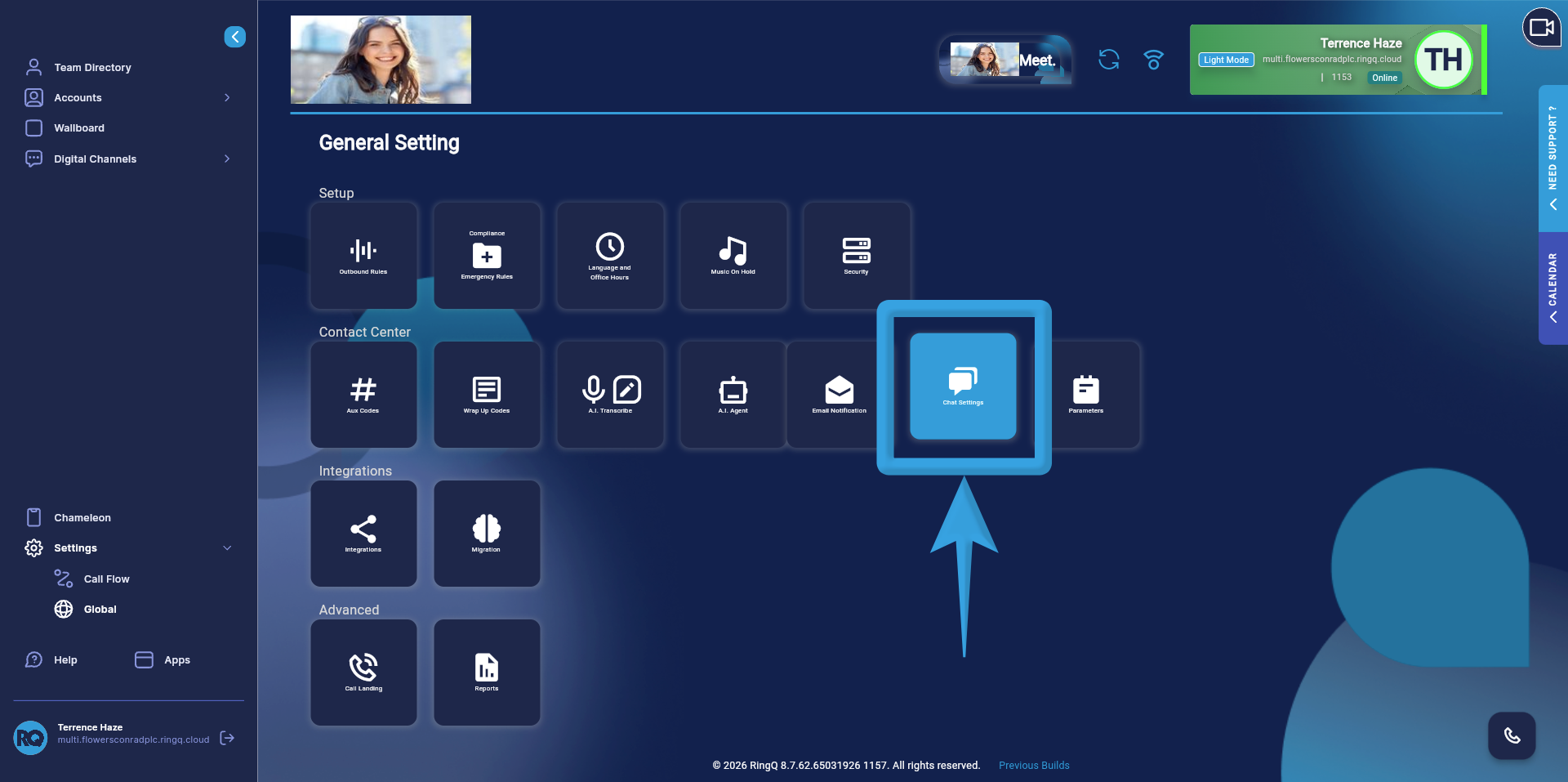
4. Click Chat Settings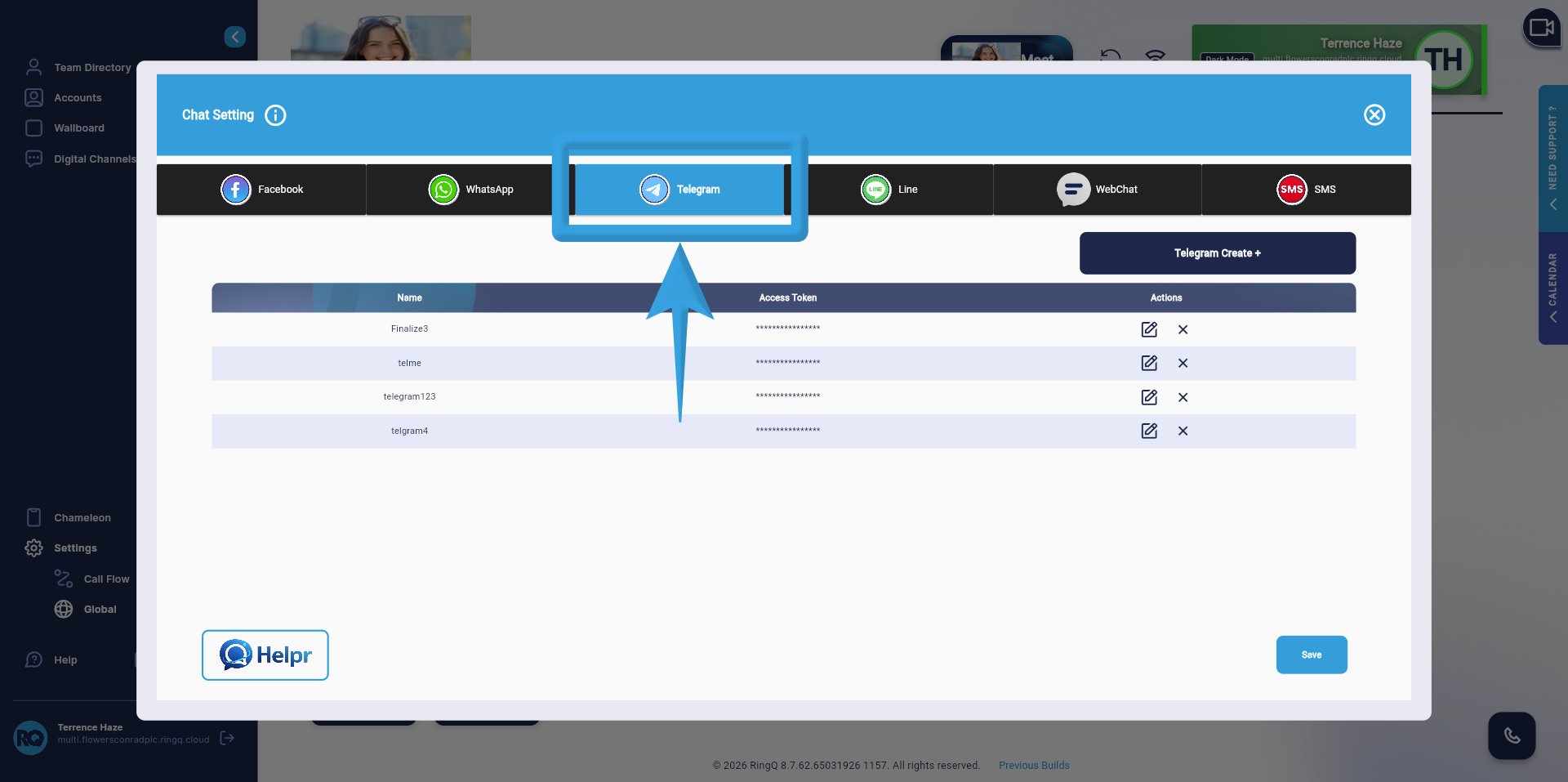
5. In the Chat Settings page, locate the list of available chat channels
Select Telegram to begin the configuration process.
At this point, RingQ is ready to accept Telegram-specific configuration details such as Bot Token and webhook settings.
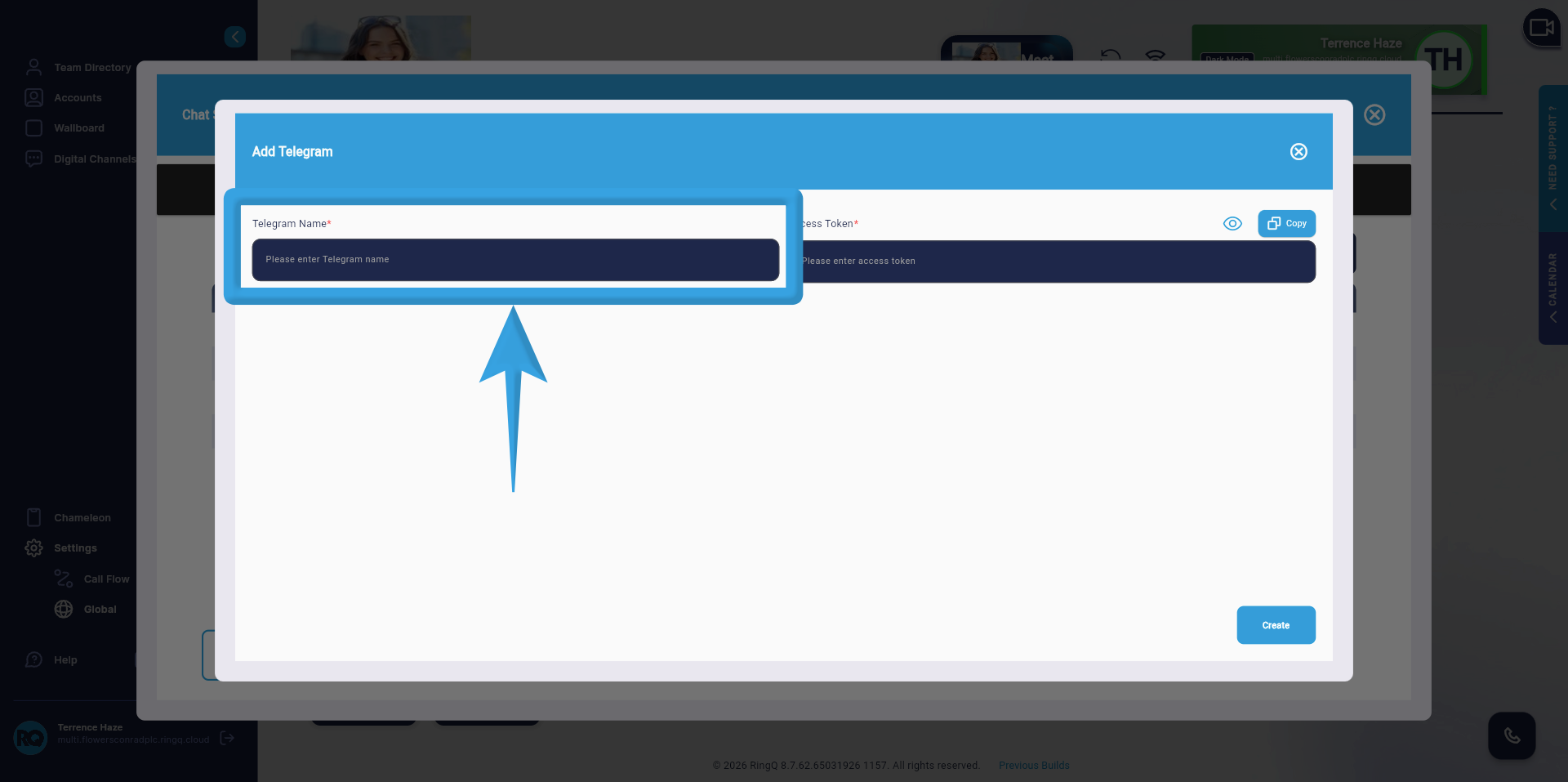
1. Enter a descriptive name for the integration. This will serve as the display label in RingQ.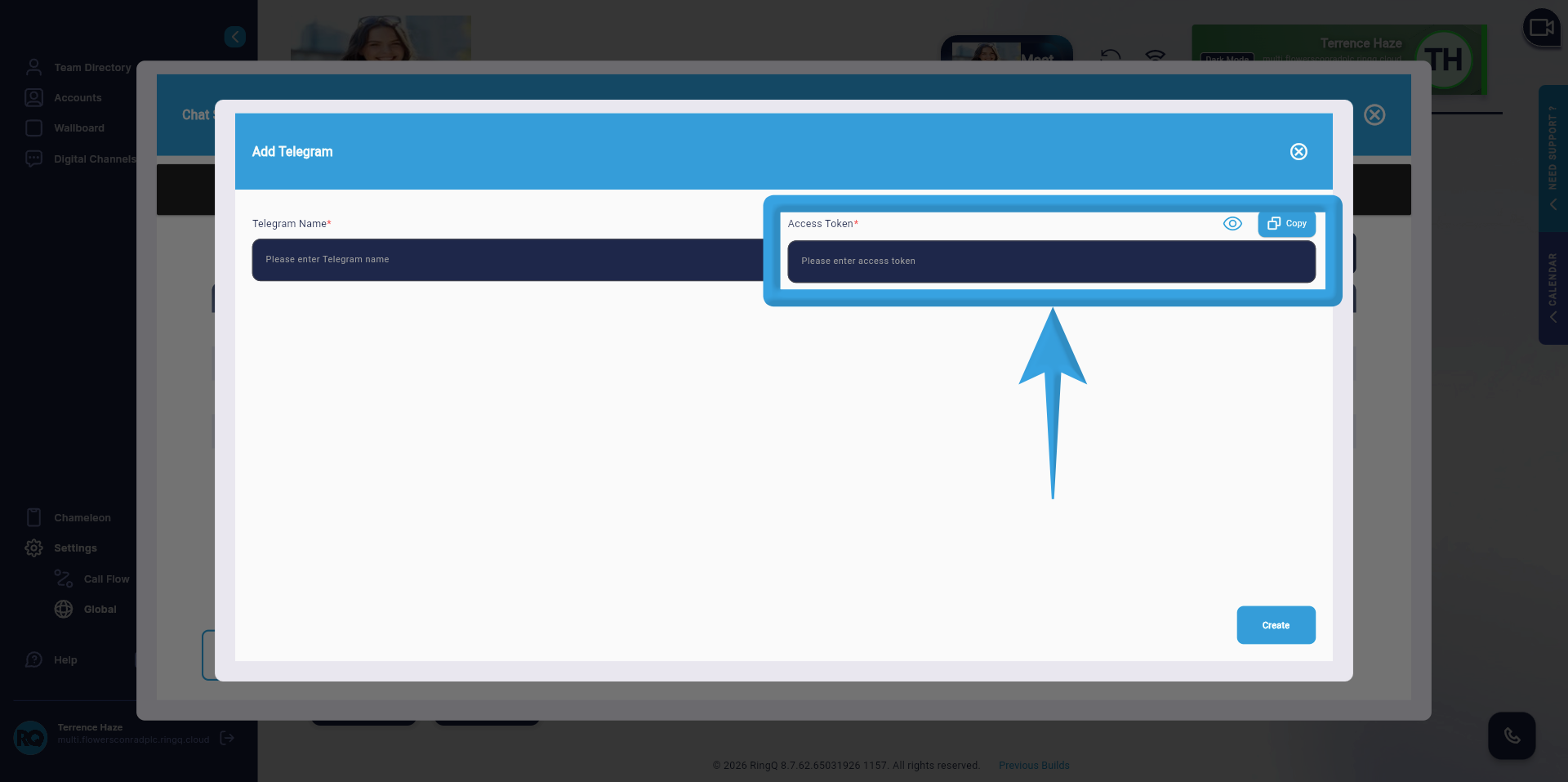
2. Copy the Bot Token from BotFather and paste it into the Bot Token field in RingQ. The Bot Token is used to authenticate and securely connect RingQ to your Telegram bot, enabling message sending and receiving.
3. Click ‘Create’.
Important Notes